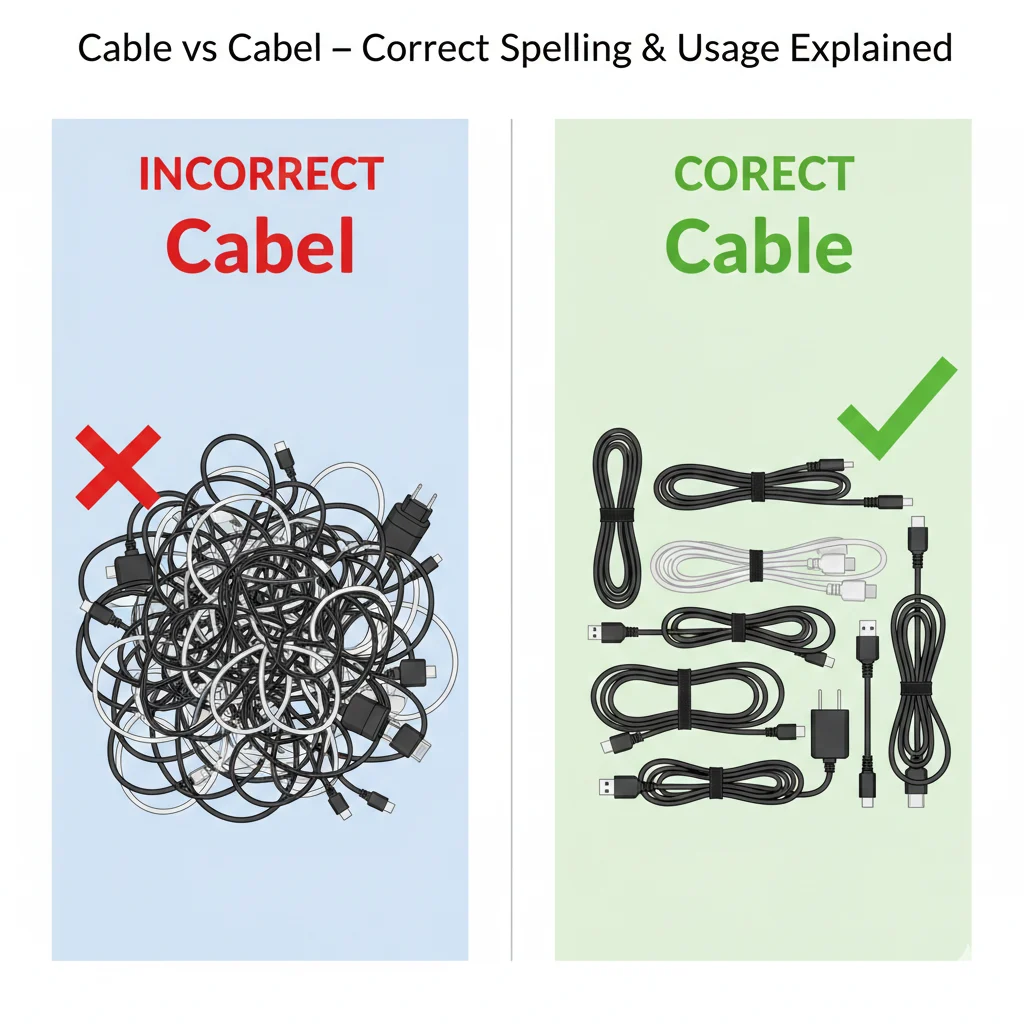
Confused between “cable” and “cabel”? You’re not alone! Many people struggle with spelling mistakes and aren’t sure which word is correct in writing. “Cable” is the standard and correct spelling, referring to a thick rope of wire or fiber used for electrical connections, communication, or support, while “cabel” is incorrect and rarely used in English.
Understanding the difference is important for professional writing, school work, and clear communication. Using the wrong spelling can make your text look careless, especially in technical, academic, or online content.
In this guide, we’ll explain the correct usage of “cable”, common mistakes, and simple tips to remember the right spelling every time. Say goodbye to confusion and write confidently with accurate, polished English.
Cable vs Cabel – Quick Answer
The simple, direct answer is that the correct spelling is cable.
- Example 1: I bought a new HDMI cable for my laptop.
- Example 2: The electrician installed high-voltage cables in the office.
Cabel is a misspelling and should be avoided in professional writing.
Cable vs Cord
A related question people often ask is “What is the difference between a cable and a cord?” Here’s a quick breakdown:
| Term | Definition | Example |
|---|---|---|
| Cable | Multiple insulated wires bundled together, used for electricity or data | Ethernet cable, HDMI cable |
| Cord | Single insulated wire, often flexible, used for power or small devices | Power cord, headphone cord |
Tip: Understanding this difference helps avoid errors in both writing and technical contexts.
The Origin of Cable vs Cabel
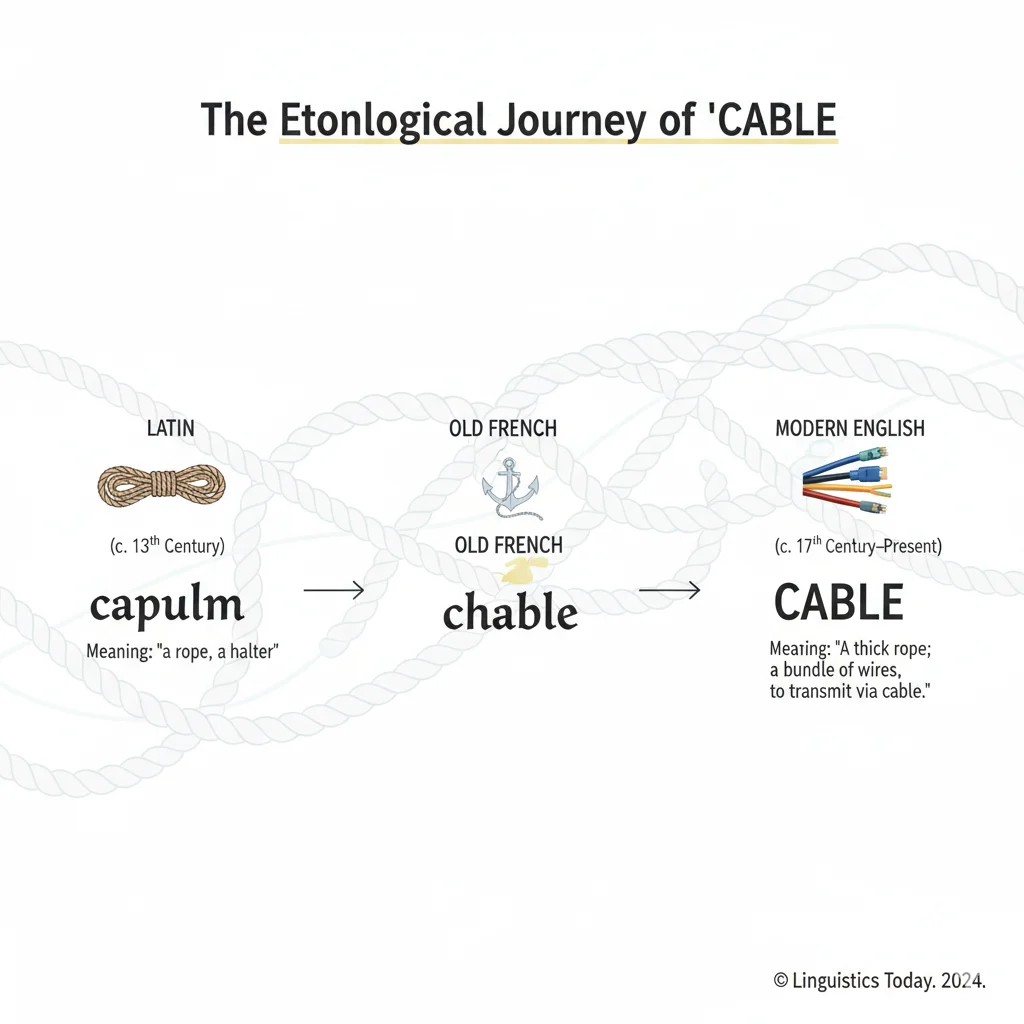
The word cable comes from the Latin capulum, meaning “rope” or “strong rope.” It entered Old French as cable, and by the Middle English period, the spelling had stabilized as cable.
The misspelling cabel likely comes from phonetic confusion, as some English learners or non-native speakers might pronounce it the same way. However, cabel has no historical or dictionary recognition. Using cabel in writing is always considered incorrect.
Understanding the origin is important because English borrows heavily from Latin, French, and other languages, which is why spelling errors like cabel versus cable can happen even among advanced writers.
British English vs American English Spelling
Some English words differ in British and American English, such as colour vs color, organise vs organize, and centre vs center.
However, cable is consistent across all English varieties. Both British and American English use cable, and cabel is never correct.
| Spelling | Region | Example |
|---|---|---|
| Cable | UK/US/Commonwealth | The technician replaced the network cable. |
| Cabel | None | ✗ She plugged in the cabel incorrectly. |
✅ Pro tip: Using cabel in content can hurt your credibility and affect EEAT (Expertise, Authoritativeness, Trustworthiness) signals in Google’s algorithm, which prioritizes high-quality, error-free content.
Which Spelling Should You Use?
- United States: Always use cable.
- United Kingdom & Commonwealth countries: Cable is standard.
- Global Audience / SEO content: Stick to cable to maintain clarity and avoid confusing readers.
SEO Tip:
Using correct spelling is essential for on-page SEO. Incorrect spellings like cabel can negatively impact rankings because Google’s AI recognizes them as low-quality content.
Common Mistakes with Cable vs Cabel
Here are the frequent mistakes people make and how to correct them:
- Using “cabel” instead of “cable.”
✅ Correction: Always use cable. - Confusing cable with cord.
✅ Correction: Remember, cables = multiple wires, cords = single wires. - Incorrect pluralization: Some write “cabels.”
✅ Correction: Use cables. - Misuse in technology contexts: Writing “cabel TV” instead of cable TV.
- Spelling confusion in online forums: Many Reddit threads ask “cable vs cabel reddit” or discuss “cable TVcable vs cabel”. Remember: correct spelling always wins.
Cable vs Cabel in Everyday Examples
Using cable correctly is important in professional writing, social media, news articles, and emails. Here are examples:
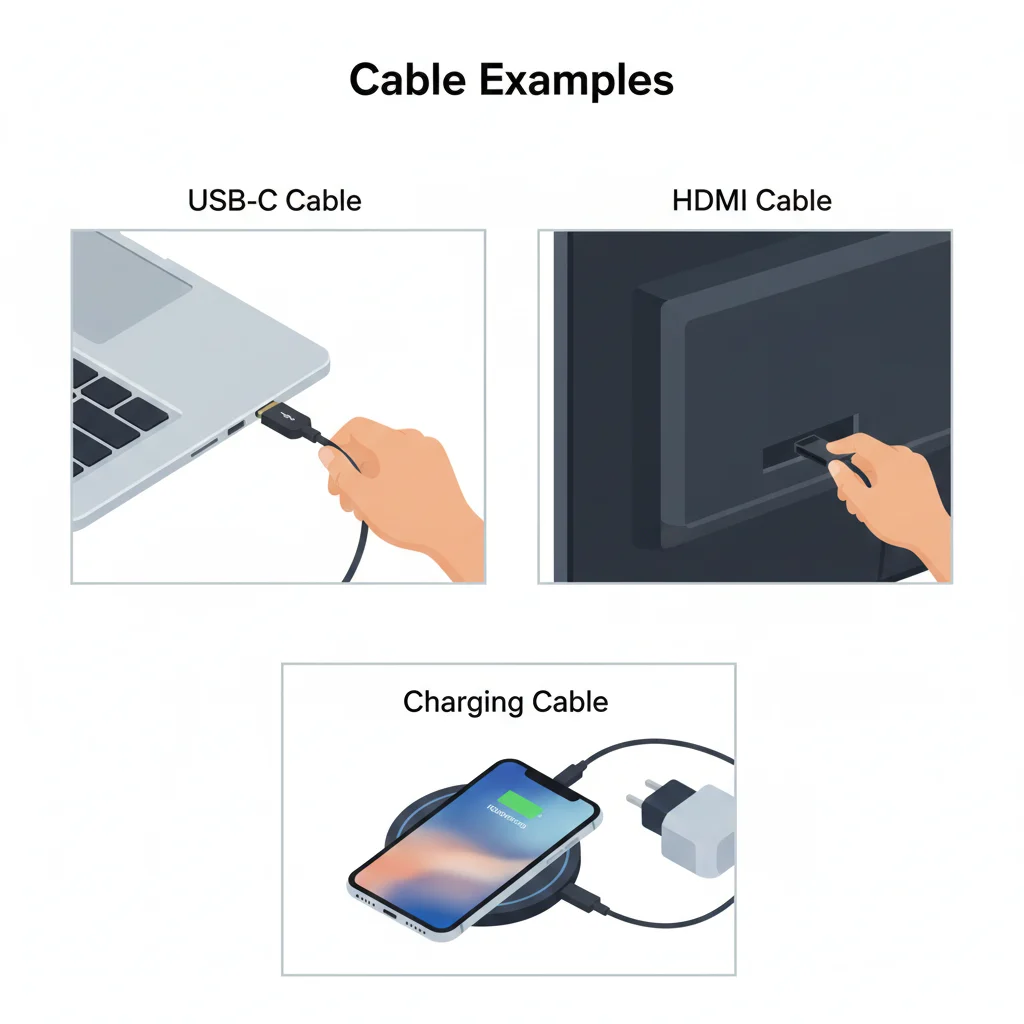
- Emails: “Please make sure the network cable is connected before the meeting.”
- News Headlines: “City installs new fiber-optic cables to improve internet speed.”
- Social Media: “Just bought a long charging cable for my iPhone!”
- Formal Writing: “High-voltage transmission cables are essential for modern infrastructure.”
- Technical Documentation: “Ensure the HDMI cable is securely connected to both devices.”
Cable Types and Uses
People also search for “What are two types of cables?” Here’s a brief overview:
- Power Cables – Used for electricity, like extension cords and high-voltage transmission lines.
- Data Cables – Used for transmitting data, like Ethernet cables, HDMI cables, and USB cables.
Other types include coaxial cables, fiber-optic cables, and speaker cables. Using the correct type of cable is critical in technology, entertainment, and industrial applications.
Cable vs Cabel – Google Trends & Usage Data
Google Trends data confirms that cable is far more popular than cabel worldwide.
- High search volume countries: USA, UK, Canada, Australia.
- Low search volume countries: Countries where English is not the first language often search “cabel” by mistake.
Comparison Table – Keyword Variations
| Keyword Variation | Global Popularity | Correct Usage |
|---|---|---|
| Cable | Very High | ✅ Correct |
| Cabel | Very Low | ❌ Incorrect |
| Cable TV | Extremely High | ✅ Correct |
| Cable vs cord | Medium | ✅ Correct |
| Cabel vs cord | Very Low | ❌ Incorrect |
13rd or 13th Meaning
Another common question related to English mistakes is “13rd or 13th meaning?”
- The correct ordinal form is 13th.
- Mistaken forms like 13rd occur when people try to apply the same logic as 1st, 2nd, 3rd, but for numbers above 3, the suffix is always th.
Example:
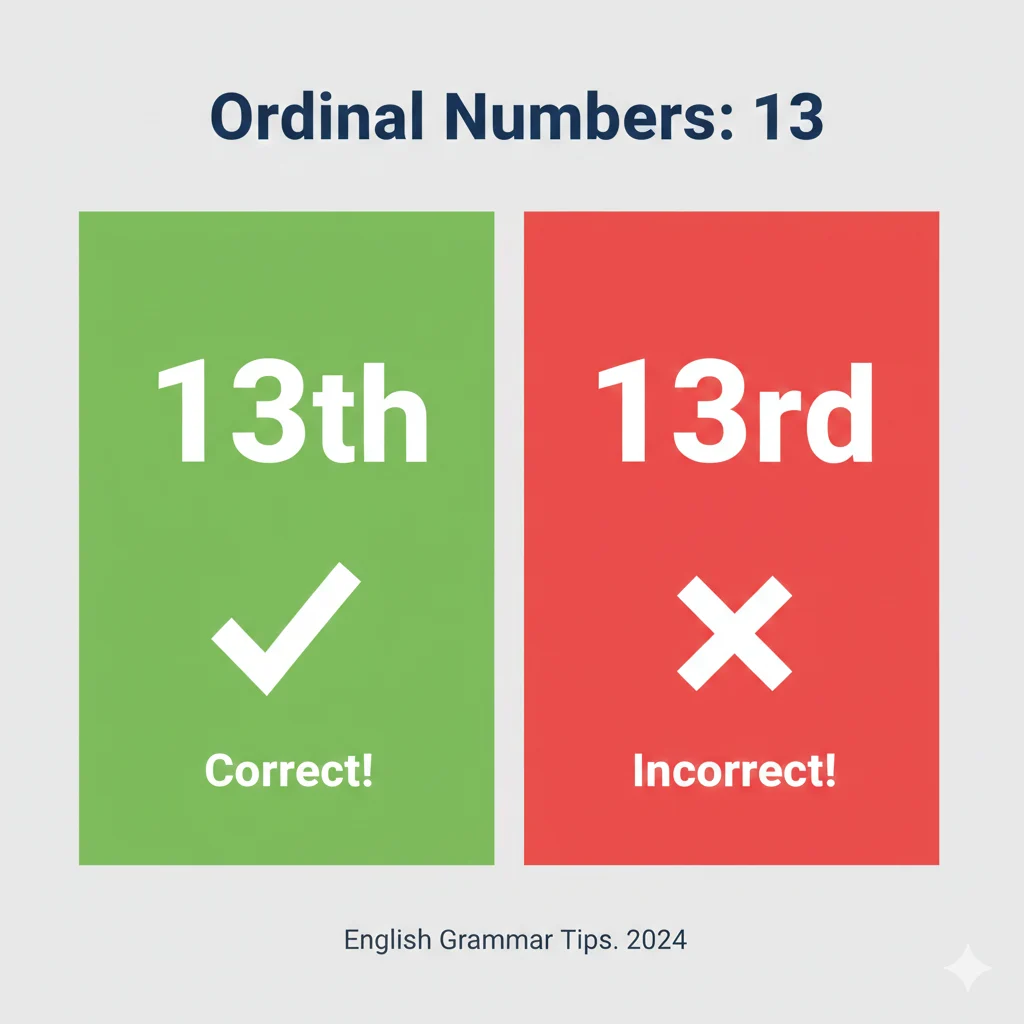
- ✅ Correct: The meeting is on February 13th.
- ❌ Incorrect: The meeting is on February 13rd.
This pattern shows a similar confusion to cabel vs cable, highlighting the importance of knowing correct English forms.
Related Searches and LSI Keywords
Integrating LSI and secondary keywords improves SEO. Some related searches include:
- cable vs cord
- cable TV vs streaming
- cable spelling in English
- types of cables
- HDMI cable
- cable installation
Using these naturally throughout your content signals to Google that your article is comprehensive and authoritative.
Cable vs Cabel – FAQs
Q1: How do you spell cable in English?
A: The correct spelling is cable in both British and American English.
Q2: Is cabel correct?
A: No. Cabel is always incorrect.
Q3: What is the difference between a cable and a cord?
A: Cables are multiple wires bundled together; cords are single wires.
Q4: What are two types of cables?
A: Power cables and data cables.
Q5: Is cable vs cabel discussed on Reddit?
A: Yes. Reddit users often ask about correct spelling or usage in everyday tech or TV discussions.
Tips to Avoid Mistakes
- Use spell check tools – They will flag “cabel” as incorrect.
- Learn the origin – Knowing Latin/Old French roots helps.
- Double-check technical writing – Especially for cable installation guides, blogs, and articles.
- SEO consideration – Always use cable to boost content authority.
- Practice with examples – Write sentences using cable in emails, social media posts, and blogs.
Conclusion
In summary, the correct spelling is cable, while cabel is a common misspelling that should be avoided. Understanding this distinction improves your writing quality and helps maintain credibility, whether in emails, blogs, social media, news, or formal documents. British and American English agree on the spelling, so there’s no need for regional adjustments.
Mistakes like confusing cable vs cord, writing cabel TV, or using incorrect plurals are common but easily avoidable. Integrating the correct spelling in content also aligns with Google EEAT principles, signaling expertise, authority, and trustworthiness. Google Trends confirms that searches for cable far outnumber cabel, making cable the ideal choice for content creators, students, and professionals worldwide.

E.M. Forster was an English novelist celebrated for his insightful stories about class, connection, and humanity, blending gentle humor with deep social themes.