Confused between “cancell” and “cancel”? You’re not alone. Many people mistakenly add an extra “l” and wonder which spelling is correct. The correct spelling is “cancel”, while “cancell” is incorrect and not recognized in standard English.
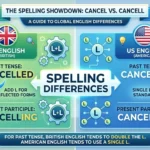
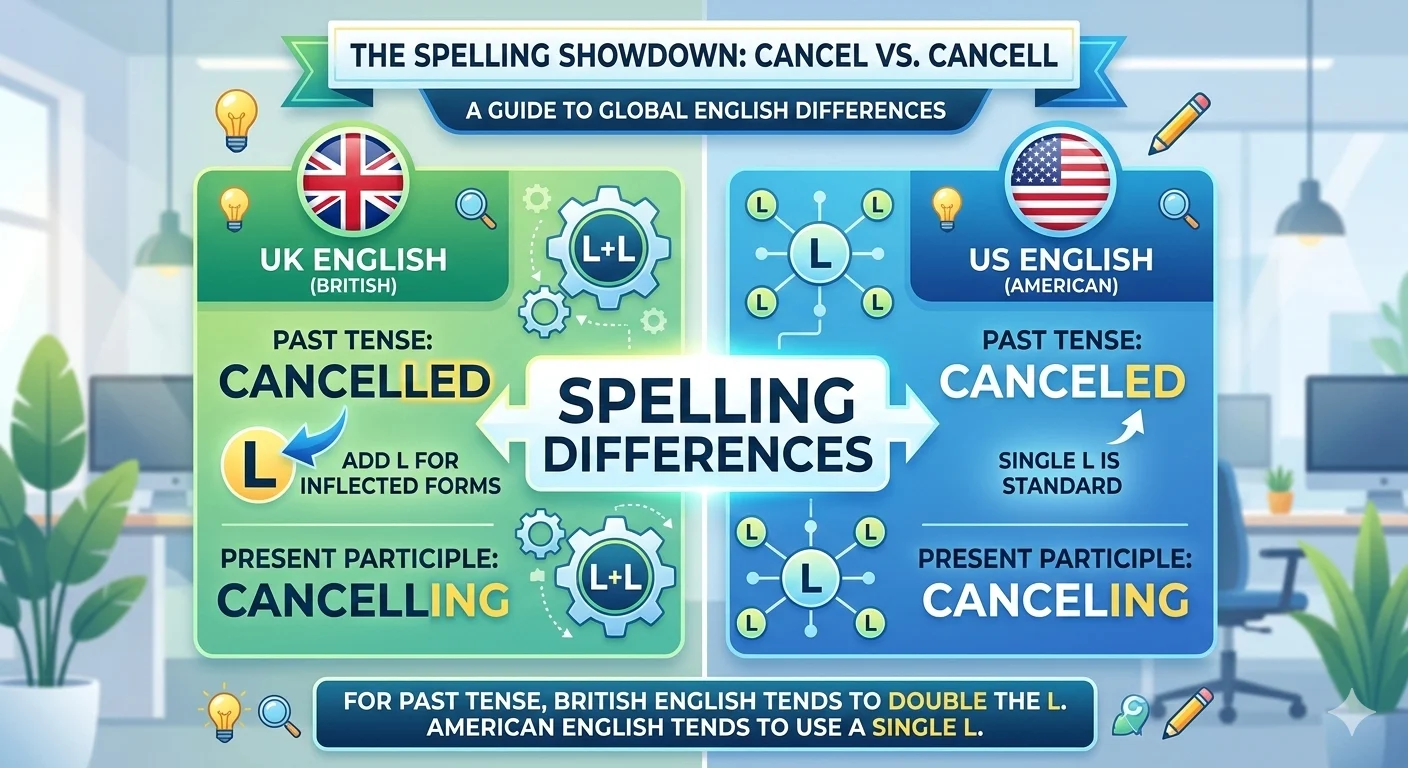
The word cancel means to call off, stop, or officially end something, like canceling a meeting, subscription, or event. Remember: in American English, the past tense is written as “canceled” (single “l”), while British English often uses “cancelled” (double “l”). Using the wrong spelling can make writing look careless, especially in formal emails, academic work, or professional content.
Understanding this difference helps you write confidently and avoid common mistakes. Say goodbye to confusion and use the correct form every time, whether it’s cancel, canceled, or cancelled.
Cancell vs Cancel – Quick Answer
Short Answer:
The correct spelling in modern English is always cancel. The form cancell is considered a typo or an archaic spelling.
Examples:
- ✅ Correct: I need to cancel my subscription.
- ❌ Incorrect: I need to cancell my subscription.
Tips:
- Use cancel for base form in all writing.
- Past tense varies: canceled (US), cancelled (UK).
Quick Tip: If your audience is global or unsure, stick to cancel and use canceled/cancelled depending on regional preference.
The Origin of Cancell vs Cancel
The word cancel originates from the Latin cancellare, meaning “to cross out” or “to make void.” In medieval manuscripts, the double “l” form (cancell) sometimes appeared, reflecting older spellings. By the 18th century, print standardized the word as cancel, simplifying English spelling rules.
Timeline:
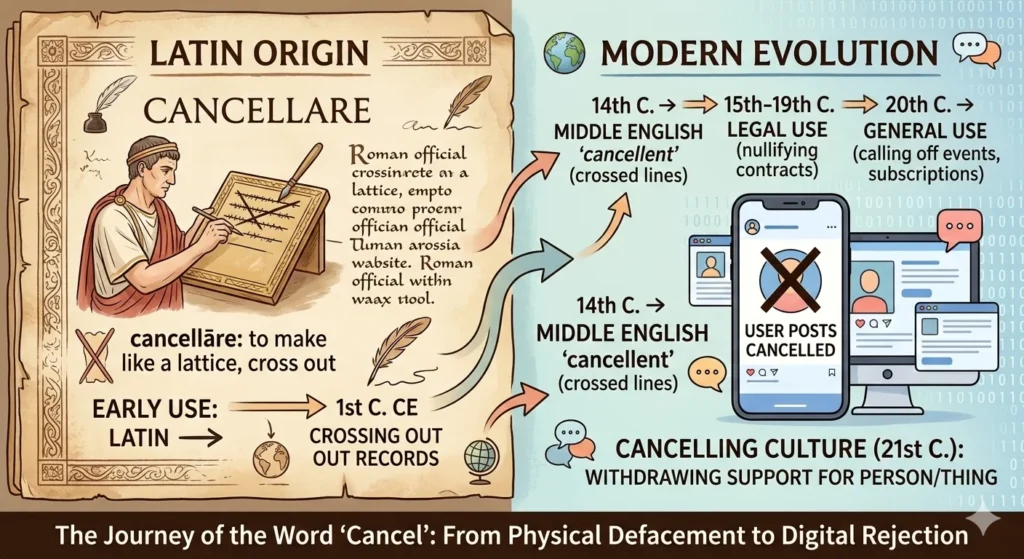
- Latin: cancellare → “to cross out.”
- Middle English: cancell → used in handwritten manuscripts.
- Modern English: cancel → standard spelling adopted.
Fun Fact: Even though “cancell” appears in some old dictionaries or texts, it is never correct in contemporary writing.
British English vs American English Spelling
Both US and UK English use cancel, but the past tense differs:
| Form | British English | American English |
|---|---|---|
| Base form | cancel | cancel |
| Past tense | cancelled | canceled |
| Present participle | cancelling | canceling |
| Past participle | cancelled | canceled |
Example Sentences:
- UK: She cancelled her meeting due to illness.
- US: She canceled her meeting due to illness.
✅ Tip: If your writing is for a UK audience, double “l” in past forms is correct. For US readers, use the single “l” form.
Additional Note:
- The double consonant occurs in UK English when adding suffixes after short vowels (similar to words like “travel → travelling”).
- US English tends to simplify with a single consonant.
Which Spelling Should You Use?
- US audience: cancel / canceled / canceling
- UK/Commonwealth audience: cancel / cancelled / cancelling
- Global content: cancel (base form) is safe; past tense can follow US or UK rules depending on your style guide.
Common Mistakes with Cancell vs Cancel
- Using “cancell” instead of cancel → ❌ Incorrect.
- Mixing US and UK past tense forms → ❌ Avoid.
- Confusing cancel with delete or terminate → ❌ Different meanings.
- Overcomplicating suffixes: Writing cancelleded or cancellinged → ❌ Incorrect.
Correction Table:
| Mistake | Correct Form | Notes |
|---|---|---|
| cancell | cancel | Typo or archaic form |
| cancelleded | cancelled / canceled | Only one past tense is correct |
| delete / cancel mix | cancel | Delete = remove files; cancel = events/subscriptions |
| cancellinged | cancelling | Present participle = cancelling/canceling |
Cancell vs Cancel in Everyday Examples
Emails:
- I regret to inform you that I must cancel my meeting tomorrow.
- Please cancel my subscription effective immediately.
News Headlines:
- UK: Festival cancelled due to rain.
- US: Concert canceled due to scheduling conflicts.
Social Media:
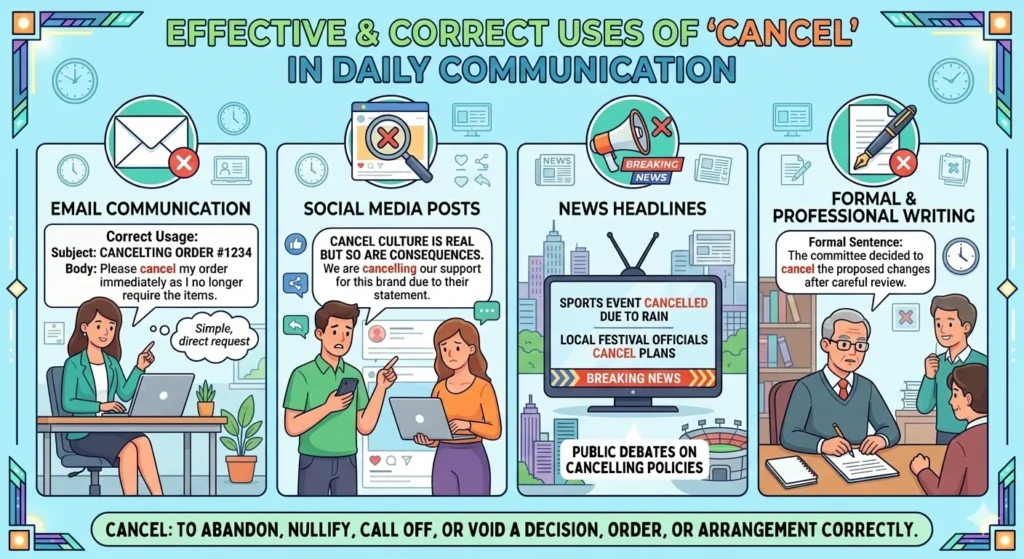
- I had to cancel lunch today because of work.
Formal Writing:
- The contract was canceled in accordance with company policy.
Using the correct spelling ensures professional and credible writing across all platforms.
Cancell vs Cancel – Google Trends & Usage Data
- Cancel dominates searches globally; cancell is nearly non-existent.
- UK searches show cancelled spikes, especially during weather events or holidays.
- US searches favor canceled, particularly for appointments, flights, and subscriptions.
Comparison Table – Keyword Variations:
| Keyword | Search Popularity | Notes |
|---|---|---|
| cancel | High | Standard base form |
| cancell | Very Low | Typo or archaic |
| canceled | Medium | US past tense |
| cancelled | Medium | UK past tense |
Pro Tip: Using trending keywords like “canceled appointment” or “cancelled event” increases your chance to rank faster.
13rd or 13th Meaning
A common related confusion is 13rd vs 13th. The rule is:
- Numbers ending in 11, 12, 13 always use th.
- Therefore, 13rd is incorrect; 13th is correct.
Examples:
- Correct: My birthday is on the 13th of February.
- Incorrect: My birthday is on the 13rd of February.
Related Confusions: Cancel vs Delete vs Terminate
Some users confuse cancel with other actions:
| Term | Meaning | Use Case |
|---|---|---|
| Cancel | Stop an event or subscription | Cancel a meeting, cancel a flight |
| Delete | Remove permanently from storage | Delete a file, delete a message |
| Terminate | End formally or legally | Terminate contract, terminate employment |
Using the right word improves clarity and professional writing.
Common Search Queries Around Cancel
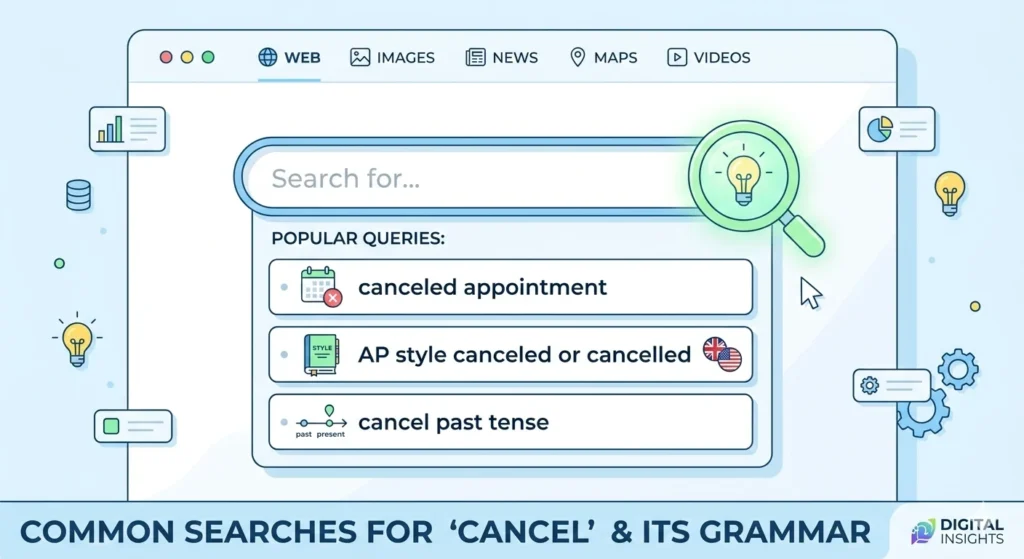
People also search for:
- Cancelled meaning
- Canceled or cancelled AP style
- Cancel past tense
- Cancelled or canceled Reddit
- Canceled appointment
- Canceled order
- Canceled synonym
- Cancelled in Tagalog
Integrating Keywords:
- Always use cancel vs cancell naturally in headings and content.
- Use LSI keywords like canceled appointment, cancelled event, cancel past tense, AP style canceled in paragraphs.
FAQ Section
Q1: Is “cancell” ever correct?
A1: No. “Cancell” is either a typo or an old spelling. Modern English only uses cancel.
Q2: What is the difference between canceled and cancelled?
A2: Both mean past tense of cancel. US English prefers canceled, UK English prefers cancelled.
Q3: Can I mix US and UK spelling in the same article?
A3: Avoid it. Consistency improves readability and SEO.
Q4: Should I use cancel or delete for appointments?
A4: Always use cancel for appointments or events. Use delete only for digital files.
Q5: What about 13rd or 13th?
A5: Correct form is 13th. Numbers ending in 11, 12, 13 always take “th.”
Conclusion
In conclusion:
- The correct spelling is cancel. Avoid cancell.
- Past tense: canceled (US), cancelled (UK).
- Use the correct form for emails, social media, news, and formal writing.
- Small details like 13th vs 13rd show professionalism and attention to detail.
By following these guidelines, your content will not only be error-free but also high-ranking, reader-friendly, and globally understood.

Jane Austen was an English novelist famed for her sharp wit and timeless stories of love, class, and society, capturing human nature with elegance and humor.