If you’ve ever paused while typing and wondered whether to write “disgard” or “discard,” you’re not alone. This is one of the most common spelling confusions in English, especially among students, bloggers, and professionals. The reason is simple: both words sound similar, but only one is correct.
Many people search for disgard vs discard because they want clarity before using the word in emails, assignments, or online content. A small spelling mistake can affect your credibility, and in some cases, even change the meaning of your sentence. That’s why it’s important to understand not just the correct spelling, but also the meaning, usage, and differences between similar words like discard and disregard.
In this complete guide, you’ll learn everything about disgard vs discard, including definitions, pronunciation, origin, real-life examples, common mistakes, and usage trends. By the end, you’ll feel confident using the correct word in any situation—and you’ll never make this mistake again.
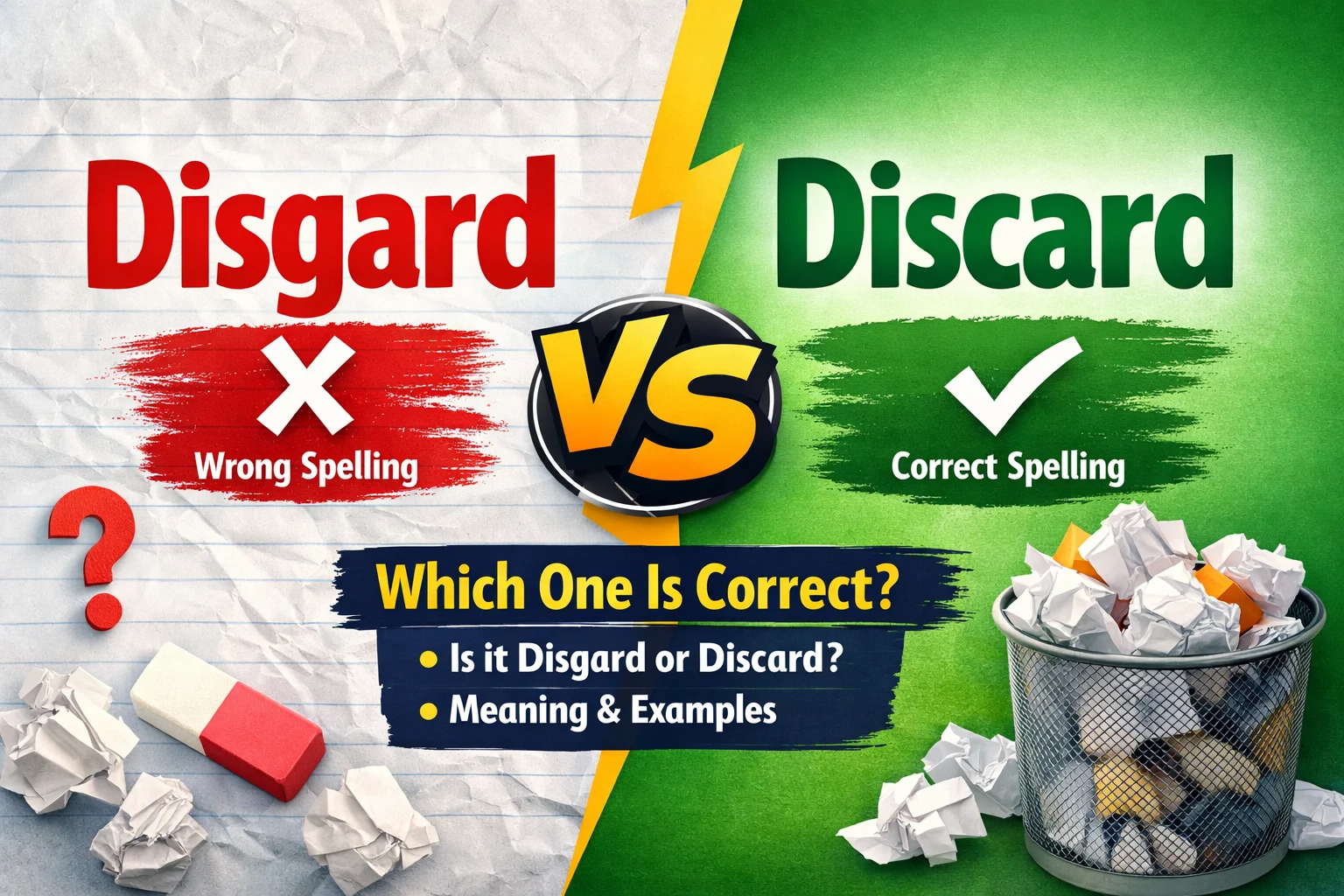
Disgard vs Discard
Let’s clear the confusion immediately:
- ✅ Discard (Correct Word)
Meaning: To throw away, remove, or get rid of something.
Example: Please discard the old papers. - ❌ Disgard (Incorrect Word)
Meaning: No meaning. It is a spelling mistake.
Example: ❌ Please disgard this file.
👉 Final Answer: Always use discard. “Disgard” is not a real English word.
Quick Tip:
If you’re unsure, remember:
👉 “Discard” has the word card in it — like removing a card you don’t need.
The Origin of Disgard vs Discard
Understanding where a word comes from often makes it easier to remember.
Origin of “Discard”
The word discard comes from:
- Old French: descarter (to throw away cards)
- Root breakdown:
- “dis-” = apart or away
- “card” = playing card
Originally used in card games, “discard” meant removing unwanted cards from your hand. Over time, it became a general term for getting rid of anything unnecessary.
Why “Disgard” Appears
“Disgard” is not a real word. It exists because:
- People confuse it with words like regard and guard
- It sounds similar when spoken
- Many rely on pronunciation instead of spelling rules
👉 Important: “Disgard” has no historical or dictionary support.
British English vs American English Spelling
Some English words differ between regions, but this is not one of them.
| Word | British English | American English | Status |
|---|---|---|---|
| Discard | discard | discard | ✅ Correct |
| Disgard | disgard | disgard | ❌ Incorrect |
Example:
- UK: You should discard unnecessary items.
- US: You should discard unnecessary items.
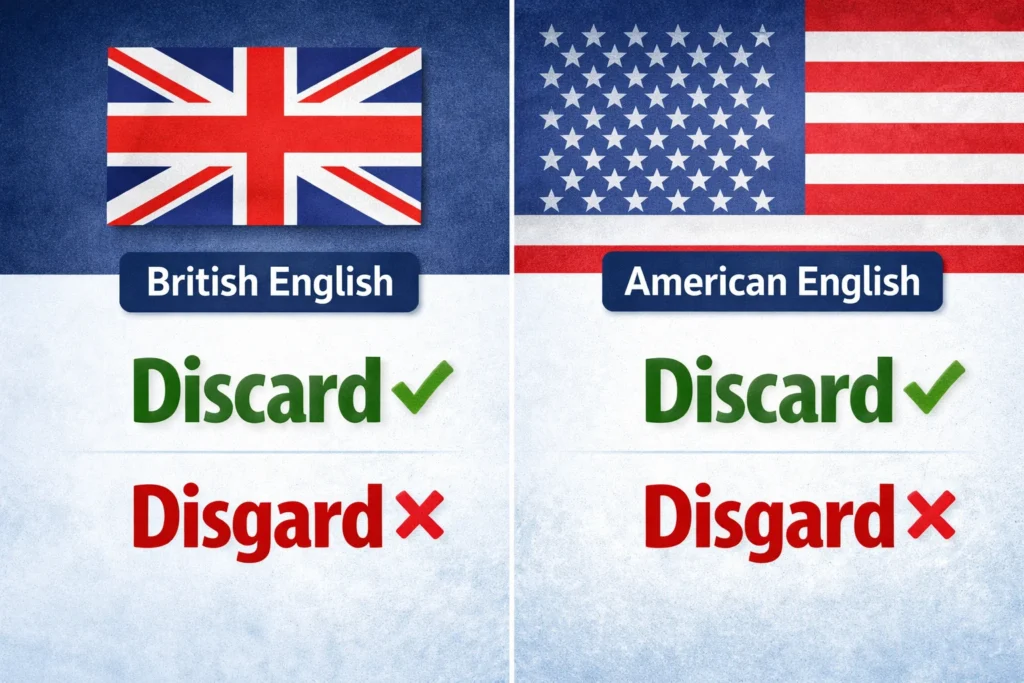
👉 Both use discard exactly the same way.
Which Spelling Should You Use?
This is simple:
👉 Use discard in every situation.
There is no audience, region, or context where “disgard” is acceptable.
Where You Should Use “Discard”:
- Emails and business communication
- Academic writing
- Blog posts and articles
- Social media captions
- Reports and research papers
Why It Matters:
Using the correct spelling:
- Builds trust with readers
- Improves clarity
- Shows strong language skills
👉 Even a small mistake like “disgard” can make your writing look unprofessional.
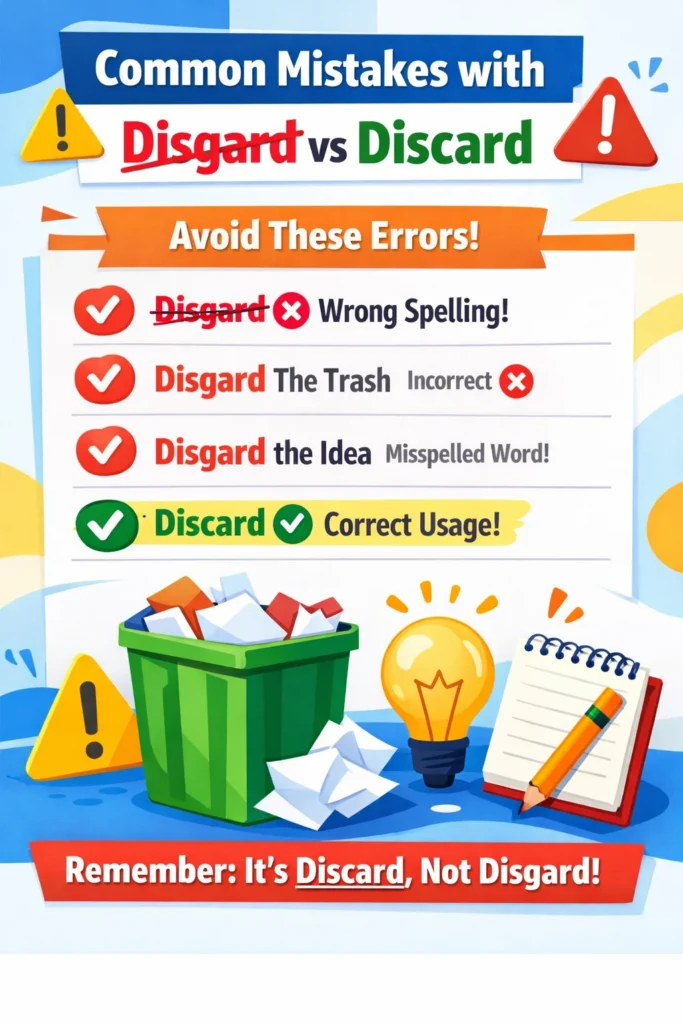
Common Mistakes with Disgard vs Discard
Let’s look at the most frequent errors and how to fix them.
1. Using “Disgard” by Mistake
❌ Please disgard this message.
✅ Please discard this message.
2. Confusing “Discard” with “Disregard”
These two words are often mixed up.
- Discard = throw away
- Disregard = ignore
❌ Discard his advice. (if you mean ignore)
✅ Disregard his advice.
3. Mixing “Discard” and “Dispose”
These words are similar but not identical.
- Discard = throw away casually
- Dispose = remove properly (often formal or safe disposal)
Example:
- Discard old clothes
- Dispose of chemical waste
4. Incorrect Pronunciation-Based Spelling
❌ disgard
✅ discard
👉 English spelling doesn’t always match pronunciation, so memorization helps.
Disgard vs Discard in Everyday Examples
Here’s how the correct word is used in real life.
Emails
- “Please discard the previous version of the document.”
- “You can discard this notification.”
Workplace Communication
- “We need to discard outdated policies.”
Social Media
- “Time to discard negative thoughts and move forward!”
Academic Writing
- “The researcher decided to discard irrelevant data.”
News Writing
- “The company plans to discard its old system.”
👉 Notice: only discard is used in all cases.
Disgard vs Discard – Google Trends & Usage Data
Search behavior shows how often people get confused.
What People Are Searching:
- Is it disgard or discard?
- Is disgard a word?
- What is disgard?
- Discard definition
- Discard pronunciation
- Discard synonyms
Usage Insights:
- High interest in South Asia, USA, and UK
- Common among:
- Students
- Content writers
- English learners
👉 Most searches come from people trying to correct a mistake, not learn a new word.
Comparison Table: Keyword Variations
| Term | Meaning / Purpose | Correct Usage |
|---|---|---|
| disgard vs discard | Spelling comparison | ✔ Topic |
| discard verb | Action word | ✔ Yes |
| discard definition | Meaning explanation | ✔ Yes |
| discard synonyms | Similar words | ✔ Yes |
| discard pronunciation | /dis-kard/ | ✔ Yes |
| disregard meaning | Ignore something | ✔ Yes |
| discardable meaning | Can be thrown away | ✔ Yes |
| disgard | Misspelling | ✘ No |
Discard Definition, Pronunciation, and Forms
Definition:
Discard (verb): To get rid of something that is no longer needed.
Pronunciation:
/dɪˈskɑːrd/ (dis-kard)
Forms:
- Discard (present)
- Discarded (past)
- Discarding (continuous)
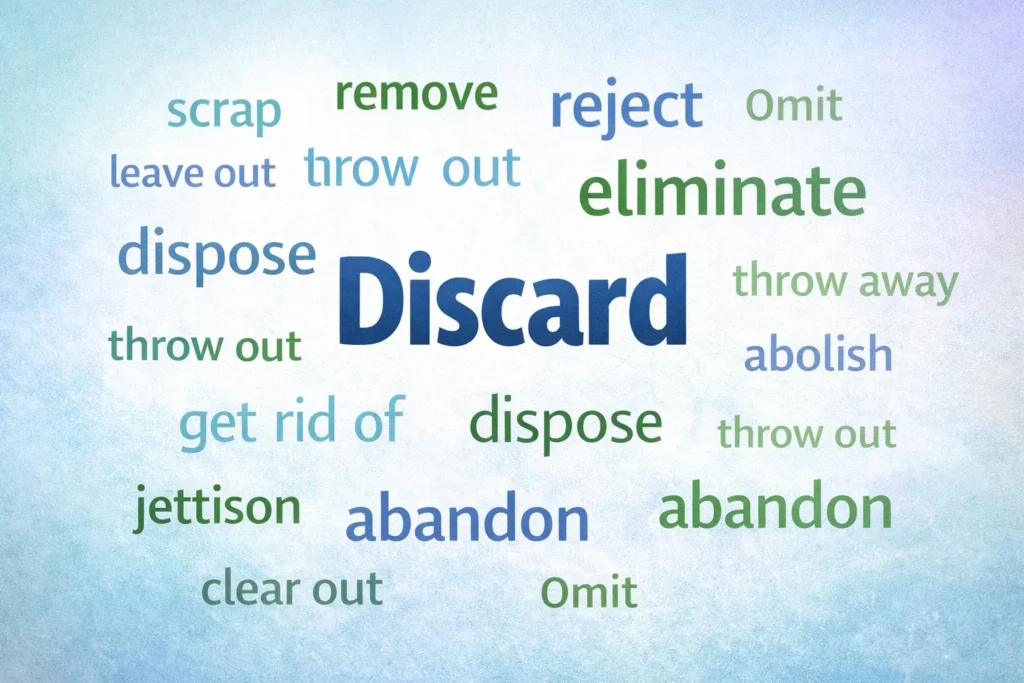
Discard Synonyms and Related Words
Here are useful alternatives:
Synonyms:
- Remove
- Eliminate
- Reject
- Throw away
- Abandon
Related Terms:
- Discardable meaning: Something that can be thrown away
- Disregard meaning: To ignore something intentionally
👉 Knowing these helps improve vocabulary and writing clarity.
Is It Disgard or Discard?
👉 The correct spelling is discard.
“Disgard” is a mistake and should never be used.
Is Disgard a Word?
❌ No, “disgard” is not a word in English.
It does not appear in any standard dictionary.
What Is Disgard?
👉 “Disgard” has no meaning.
It is simply an incorrect spelling of “discard.”
Is Discard and Dispose the Same?
Not exactly.
| Word | Meaning | Usage Context |
|---|---|---|
| Discard | Throw away | General situations |
| Dispose | Remove properly or formally | Waste, chemicals |
Frequently Asked Questions (FAQs)
1. Is it disgard or discard?
The correct spelling is discard. “Disgard” is incorrect.
2. Why do people write disgard?
Because it sounds similar to words like “regard” and “guard.”
3. What does discard mean?
It means to throw away or remove something unnecessary.
4. Can I use disgard in formal writing?
No, it is considered a spelling mistake.
5. What is the difference between discard and disregard?
- Discard = throw away
- Disregard = ignore
Conclusion
Understanding the difference between disgard vs discard is essential for clear and professional communication. While “discard” is the correct and widely accepted word meaning to throw away or remove something, “disgard” is simply a common spelling mistake with no real meaning. This confusion often happens because of similar-sounding words like “regard,” but once you understand the origin and correct usage, it becomes easy to avoid. Whether you are writing emails, academic papers, or online content, using the correct spelling improves your credibility and ensures your message is clear. By remembering simple tips, practicing correct usage, and avoiding common mistakes, you can confidently use “discard” in any situation and never second-guess yourself again.

Barbara Pym was an English novelist known for her witty, observant stories of everyday life, blending humor and quiet emotion with sharp social insight.