English spelling mistakes are common, even for experienced writers. One mistake many people make is writing “happend” instead of “happened.” Because of this confusion, thousands of people search online for “happend vs happened” every month.
Why does this confusion happen? The main reason is pronunciation. When people say the word aloud, the middle “e” sound is very soft. As a result, some writers accidentally remove that letter and spell the word incorrectly. This leads to questions like:
- What is correct, happened or happend?
- What does happend mean?
- Why is it happened and not happend?
- How do we spell happening correctly?
Understanding the difference between these spellings is important because spelling mistakes can affect communication. In emails, school assignments, news articles, and professional writing, correct grammar shows clarity and credibility.
This guide explains everything you need to know about happend vs happened. You will learn the correct spelling, see real happened examples, understand the happen past tense, explore happened pronunciation, and discover common mistakes writers make. By the end, you will know exactly which spelling to use and why it matters in everyday English.
Happend vs Happened
Short answer:
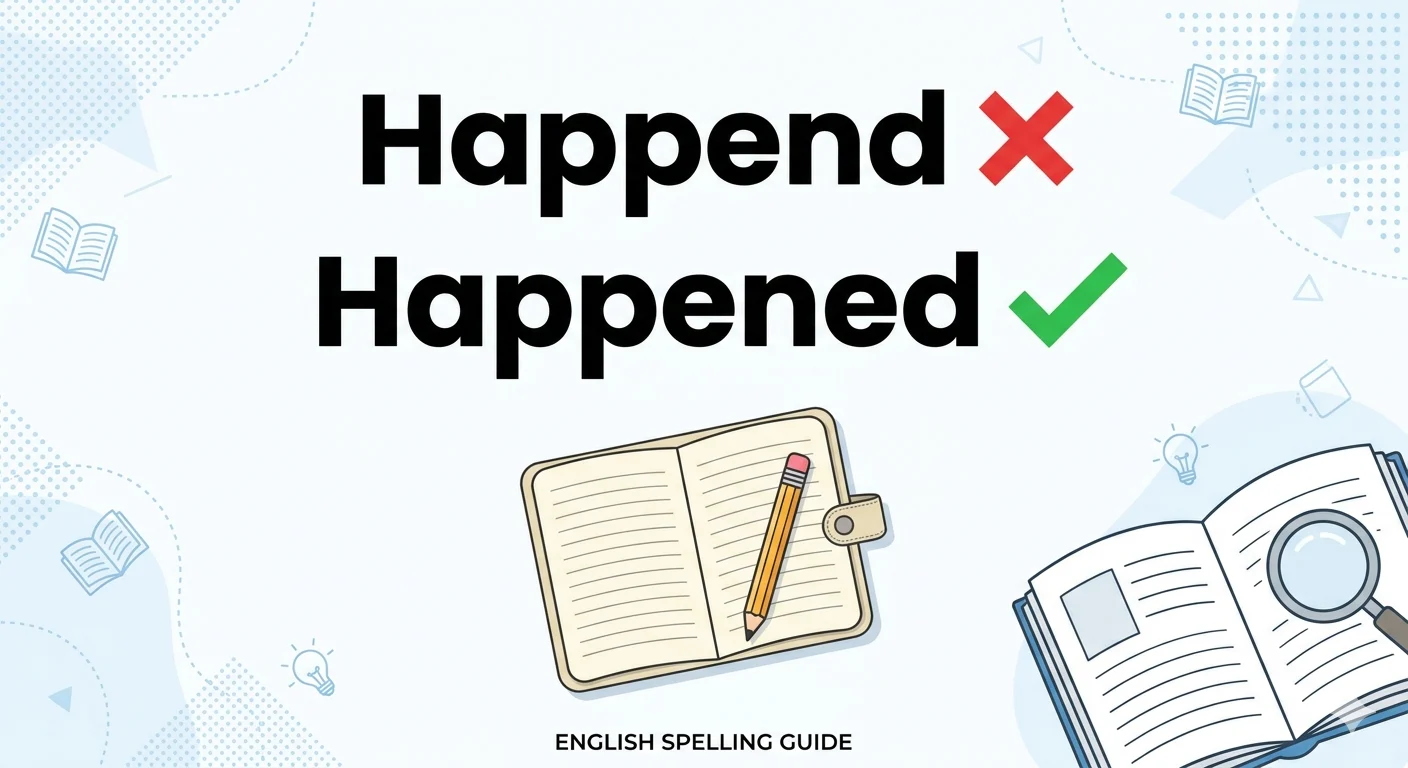
The correct spelling is “happened.”
The word “happend” is incorrect and not accepted in English dictionaries.
Correct Example
- Something strange happened yesterday.
- Do you know what happened at the meeting?
Incorrect Example
- Something strange happend yesterday.
What Happened Meaning
The phrase “what happened” means asking about something that took place in the past.
Example:
- What happened at school today?
Happens vs Happened
| Word | Grammar Form | Example |
|---|---|---|
| Happen | Base verb | Things happen for a reason |
| Happens | Present tense | It happens every year |
| Happened | Past tense | It happened yesterday |
| Happening | Continuous form | Something exciting is happening |
| Happend | Incorrect spelling | Not correct |
If you ever wonder how to spell happening, remember the rule:
happen + ing = happening
The Origin of Happened
Understanding the origin of a word can help explain its spelling.
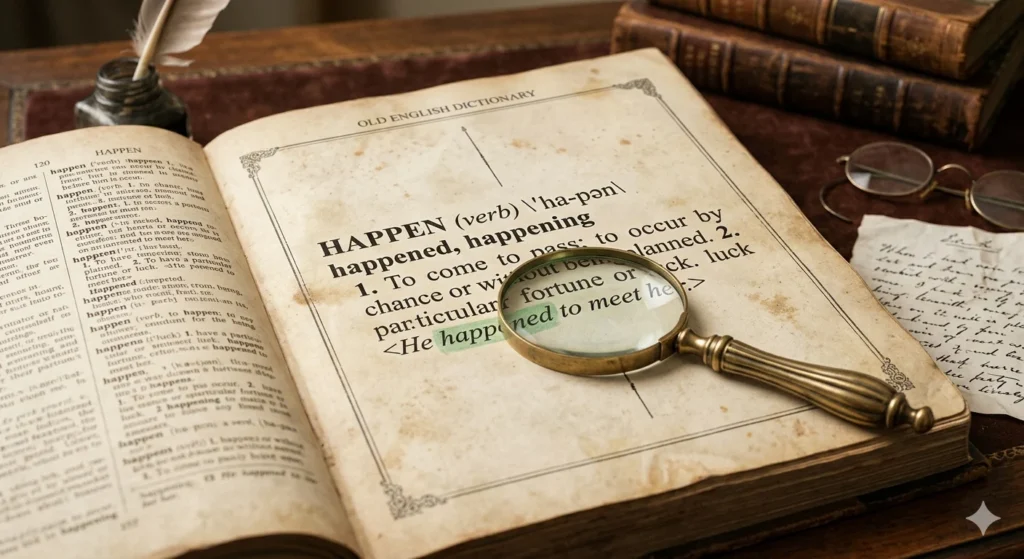
The verb “happen” appeared in English during the 14th century. It came from Middle English and originally meant “to occur by chance.”
Over time, the word became part of everyday language and followed normal English grammar patterns.
Word Forms
| Form | Word |
|---|---|
| Base verb | Happen |
| Present tense | Happens |
| Past tense | Happened |
| Continuous | Happening |
Why the Spelling Includes “ed”
English verbs usually form their past tense by adding -ed.
Examples:
| Verb | Past Tense |
|---|---|
| Work | Worked |
| Talk | Talked |
| Happen | Happened |
Because of this rule, the correct past tense is happened, not happend.
Happened Pronunciation
One reason people misspell the word is its pronunciation.
Happened pronunciation:
/ˈhæpənd/
It sounds like:
HAP-uhnd
Notice that the middle “e” is soft. When people hear the word quickly, they may assume the spelling is happend. However, the correct spelling always includes -ed.
Pronunciation Tip
Break the word into two parts:
hap + pend
Even though we say it quickly, the “e” must stay in the spelling.
British English vs American English Spelling
English sometimes uses different spellings depending on the country. For example:
| American English | British English |
|---|---|
| Color | Colour |
| Favorite | Favourite |
| Center | Centre |
However, “happened” is spelled the same in both British and American English.
Comparison Table
| English Version | Correct Spelling |
|---|---|
| American English | Happened |
| British English | Happened |
| Australian English | Happened |
| Canadian English | Happened |
The spelling never changes across these versions.
This means happend is incorrect everywhere.
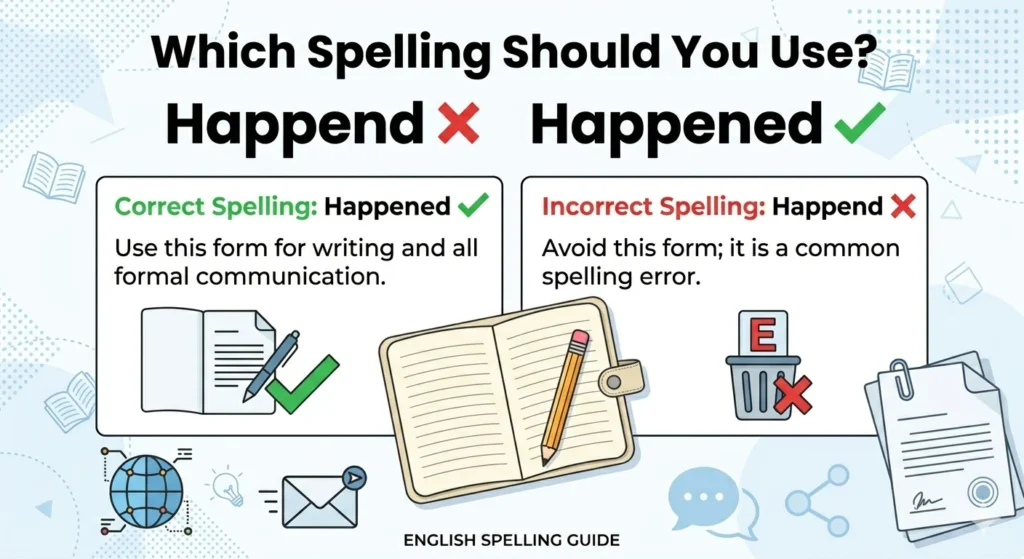
Which Spelling Should You Use?
The answer is simple: always use “happened.”
If your audience is in the United States
Use happened.
Example:
- The meeting happened on Monday.
If your audience is in the United Kingdom
Use happened.
Example:
- The accident happened near London.
If your audience is global
Use happened.
The spelling happend should not appear in professional writing.
Common Mistakes with Happend vs Happened
Many writers make similar spelling mistakes. Understanding these errors will help you avoid them.
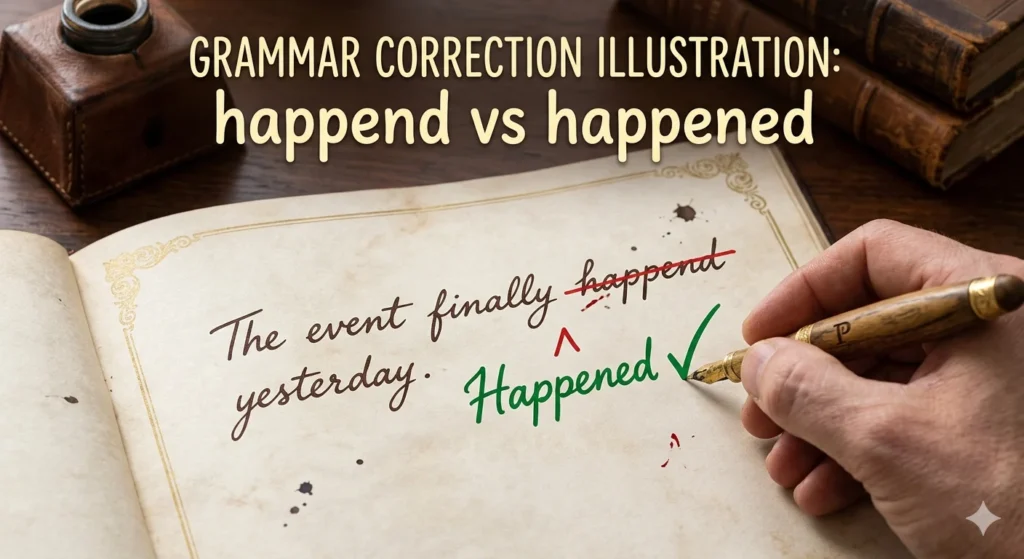
Removing the Letter “e”
Incorrect:
- Something happend yesterday.
Correct:
- Something happened yesterday.
Confusing Verb Tenses
Incorrect:
- The accident happen yesterday.
Correct:
- The accident happened yesterday.
Using Present Instead of Past
Incorrect:
- It happens yesterday.
Correct:
- It happened yesterday.
Mixing Continuous Forms
Incorrect:
- Something is happen right now.
Correct:
- Something is happening right now.
Happened Synonym
Sometimes writers want different words instead of happened. These are called synonyms.
Common Synonyms
| Synonym | Meaning | Example |
|---|---|---|
| Occurred | Something took place | The accident occurred yesterday |
| Took place | An event happened | The meeting took place today |
| Came about | Something developed | The change came about slowly |
| Transpired | Something became known | The truth transpired later |
These synonyms can make writing more interesting.
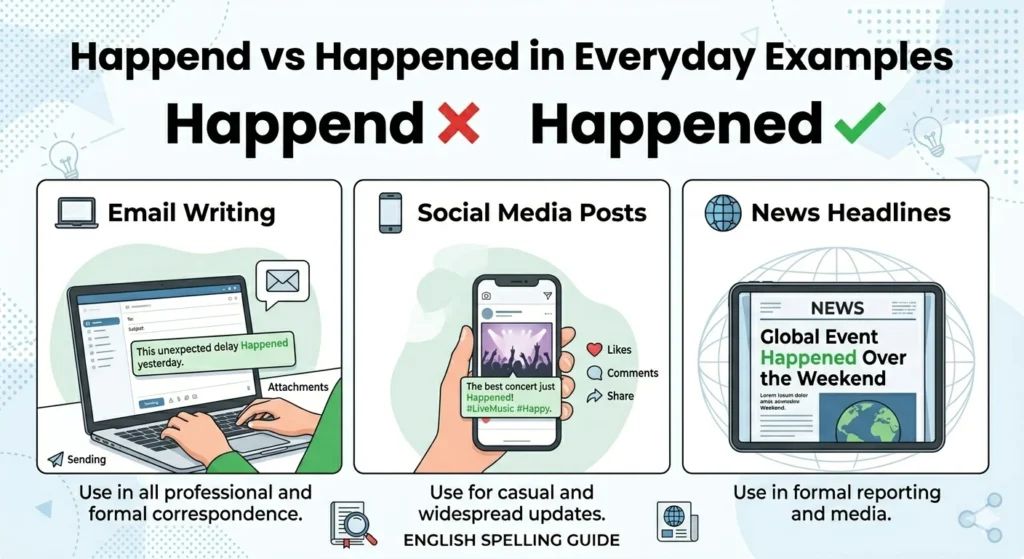
Happend vs Happened in Everyday Examples
Real examples help you understand how the word works in daily communication.
Emails
Example:
- I want to explain what happened during the meeting yesterday.
News Articles
Example:
- The earthquake happened early this morning.
Social Media
Example:
- You won’t believe what happened today!
Formal Writing
Example:
- The incident happened during the research process.
Happened Examples
Here are more sentences to show correct usage.
- Something amazing happened today.
- The accident happened on the highway.
- A mistake happened during the test.
- The meeting happened earlier than planned.
- The problem happened because of a software error.
Happens vs Happened vs Happening
Understanding different verb forms makes writing easier.
| Word | Meaning | Example |
|---|---|---|
| Happens | Present | It happens every year |
| Happened | Past | It happened yesterday |
| Happening | Ongoing | Something exciting is happening |
Example sentence:
- Something strange happened, and now something exciting is happening.
Happened in Spanish
Many English learners search for translations.
The word “happened” in Spanish is:
“pasó”
Example:
English:
- What happened?
Spanish:
- ¿Qué pasó?
Another example:
English:
- The accident happened yesterday.
Spanish:
- El accidente pasó ayer.
Happend vs Happened – Google Trends & Usage
Search engines show that people around the world often search for spelling help.
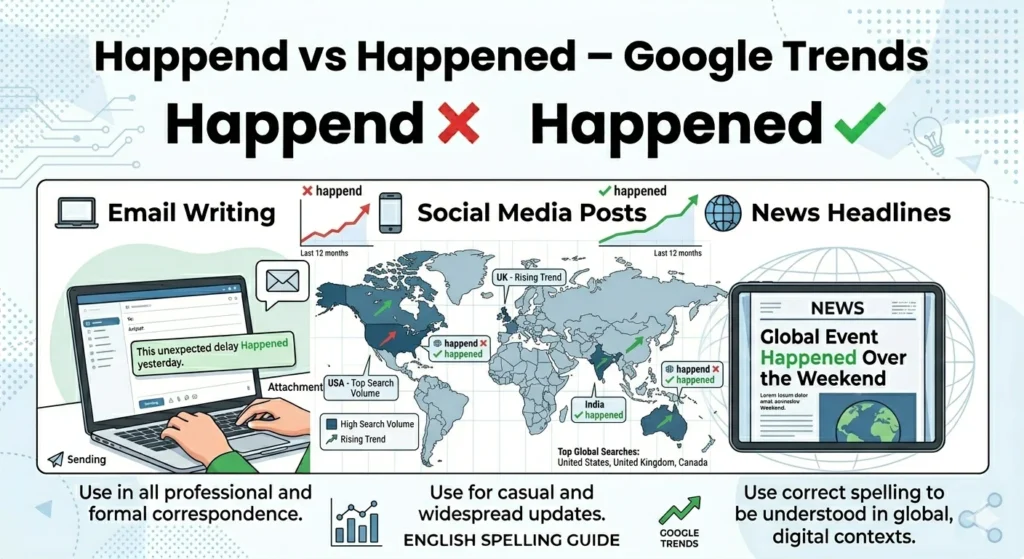
Common searches include:
- happend vs happened
- what does happend mean
- how do we spell happend
- why is it happened and not happend
Countries with High Search Volume
| Country | Reason |
|---|---|
| India | English learners |
| Pakistan | Student searches |
| Philippines | ESL learners |
| Indonesia | Language learning |
| United States | Typing mistakes |
Most search engines automatically correct “happend” → “happened.”
Comparison Table: Happend vs Happened
| Feature | Happened | Happend |
|---|---|---|
| Correct spelling | Yes | No |
| Dictionary word | Yes | No |
| Used in formal writing | Yes | No |
| Past tense of happen | Yes | No |
| Accepted in grammar | Yes | No |
This table clearly shows why happened is always the correct choice.
Practice Exercises
These exercises help learners remember the correct spelling.
Fill in the Blank
Choose the correct word.
- Something strange ______ yesterday.
- Do you know what ______ at the meeting?
- The accident ______ last night.
- Nothing unusual ______ today.
Answers
- happened
- happened
- happened
- happened
More Happened Examples
Here are additional sentences to improve understanding.
- A surprising event happened at school.
- The meeting happened earlier than expected.
- A problem happened during the project.
- Something funny happened on the way home.
- The change happened very quickly.
Why Spelling Matters in English
Correct spelling is important for many reasons.
1. Clear Communication
Correct spelling ensures people understand your message.
2. Professional Writing
Employers expect correct grammar in emails and reports.
3. Academic Success
Students must write correctly in assignments and exams.
4. Online Content
Correct spelling improves credibility in blogs and articles.
Using happened instead of happend shows attention to detail.
FAQs
What is correct, happened or happend?
The correct spelling is happened. The word happend is a spelling mistake.
What does happend mean?
“Happend” does not have a meaning because it is not a real English word.
How do we spell happend?
The correct spelling is happened with -ed at the end.
Why is it happened and not happend?
English grammar rules require adding -ed to form the past tense of happen, creating happened.
What is the happen past tense?
The past tense of happen is happened.
How to spell happening?
The correct spelling is happening.
What is happened pronunciation?
The word is pronounced /ˈhæpənd/, sounding like HAP-uhnd.
Conclusion
Understanding the difference between happend vs happened is simple once you know the correct spelling rule. The base verb “happen” forms its past tense by adding -ed, which creates the word “happened.” The spelling “happend” is only a common mistake and is not recognized in standard English.
This confusion often occurs because of pronunciation. When spoken quickly, the middle “e” in happened pronunciation is very soft. As a result, some writers remove it when typing or writing. However, correct spelling is essential in emails, academic writing, news articles, and professional communication.
Learning the different forms of the verb also helps. The present form is happens, the past form is happened, and the continuous form is happening. Once you remember these forms, it becomes easier to avoid mistakes.
The key takeaway is simple: always use “happened.” If you see the spelling “happend,” it should be corrected immediately. By following this rule and practicing with examples, you can improve your English writing and communicate more clearly.

Jane Austen was an English novelist famed for her sharp wit and timeless stories of love, class, and society, capturing human nature with elegance and humor.