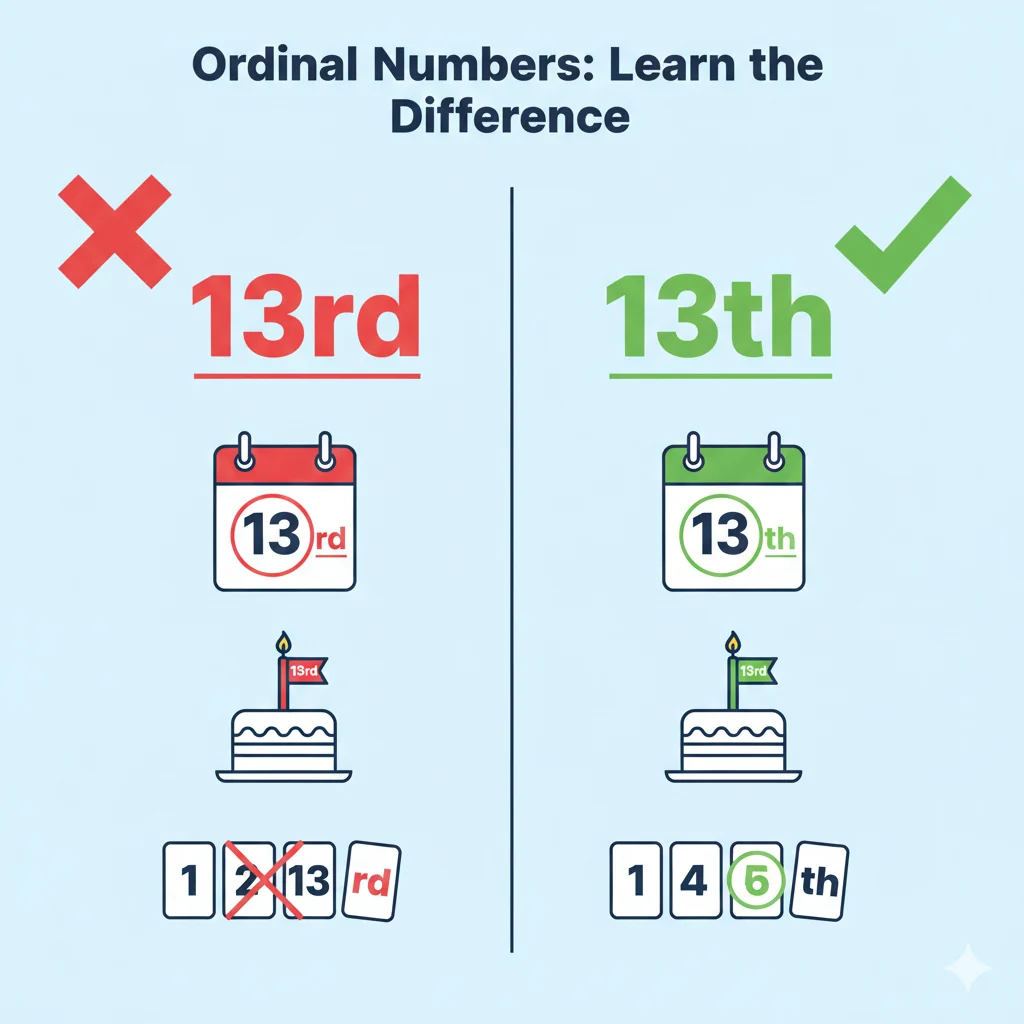
Confused between 13rd vs 13th? The correct spelling is 13th, and “13rd” is grammatically incorrect in English.
This confusion happens because people follow the pattern of 3rd and assume 13 should become 13rd. However, English ordinal numbers follow a specific grammar rule. While 1 takes “st,” 2 takes “nd,” and 3 takes “rd,” numbers from 11 to 19 always use “th.” That means 11th, 12th, and 13th are all correct forms.
Using 13rd in birthdays, dates, anniversaries, or academic writing can make your content look unprofessional and incorrect. Understanding this simple rule helps you avoid common grammar mistakes and improve your English usage.
In this guide, you’ll learn the correct spelling, the ordinal number rule, practical examples, and easy memory tricks to never confuse 13rd and 13th again.
Quick Answer: 13rd vs 13th ✅
The short answer: 13th is correct, 13rd is wrong.
Examples:
- ✅ Correct: June 13th, 2026
- ❌ Incorrect: June 13rd, 2026
- ✅ Correct: My 13th birthday is coming soon
- ❌ Incorrect: My 13rd birthday is coming soon
Tip: Only 1st, 2nd, 3rd take -st, -nd, -rd. All other numbers → -th.
The Origin of 13rd vs 13th
Ordinal suffixes have roots in Old English and Latin:
- -st → first
- -nd → second
- -rd → third
- -th → all other numbers
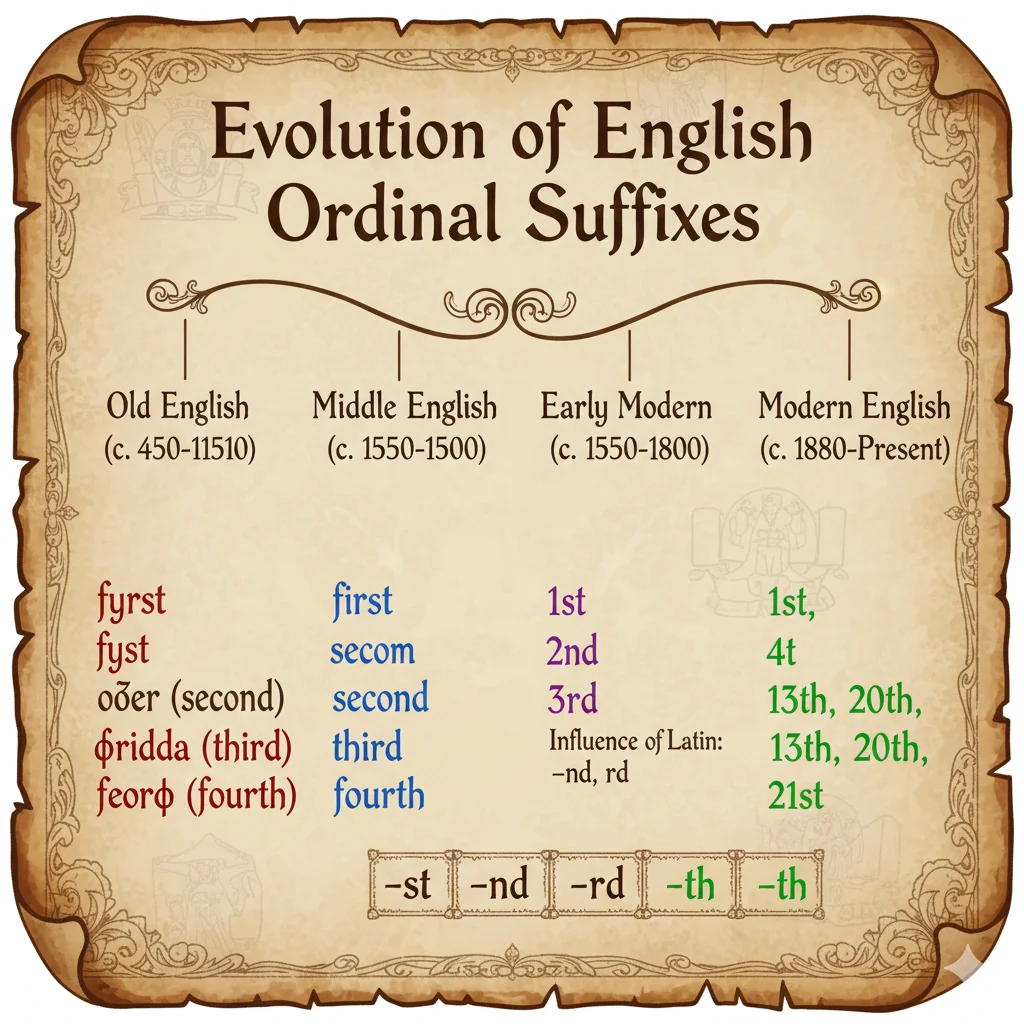
The mistake with 13 comes from overgeneralizing the -rd used in 3 → 13. Historical texts show that only 1, 2, 3 take these unique endings; after that, -th is standard. Misunderstandings persist today, which is why searches for Is it correct to say 13th? are so common.
Origin of Ordinal Numbers: -st, -nd, -rd, -th
Ordinal suffixes come from Old English & Latin:
- -st → first
- -nd → second
- -rd → third
- -th → all other numbers
British English vs American English Spelling
Both UK and US English follow the same ordinal rules. The difference is mainly date format:
| Format | British English | American English |
|---|---|---|
| Date order | 13th June 2026 | June 13th, 2026 |
| Birthday example | My 13th birthday | My 13th birthday |
| Common mistakes | 13rd June | 13rd June |
Tip: Regardless of region, never write 13rd in formal writing.
Which Spelling Should You Use?
- US audience: June 13th, 2026, October 13th birthday
- UK/Commonwealth audience: 13th June 2026, 13th October birthday
- Global writing: Always use 13th to avoid confusion
Examples:
- US: “The meeting is scheduled for June 13th.”
- UK: “The meeting is scheduled for 13th June.”
- Global email: “Please submit your application by 13th June or June 13th.”
Month-Specific Examples
June 13th or 13rd:
- Correct: “Our wedding anniversary is on June 13th.”
- Incorrect: “Our wedding anniversary is on June 13rd.”
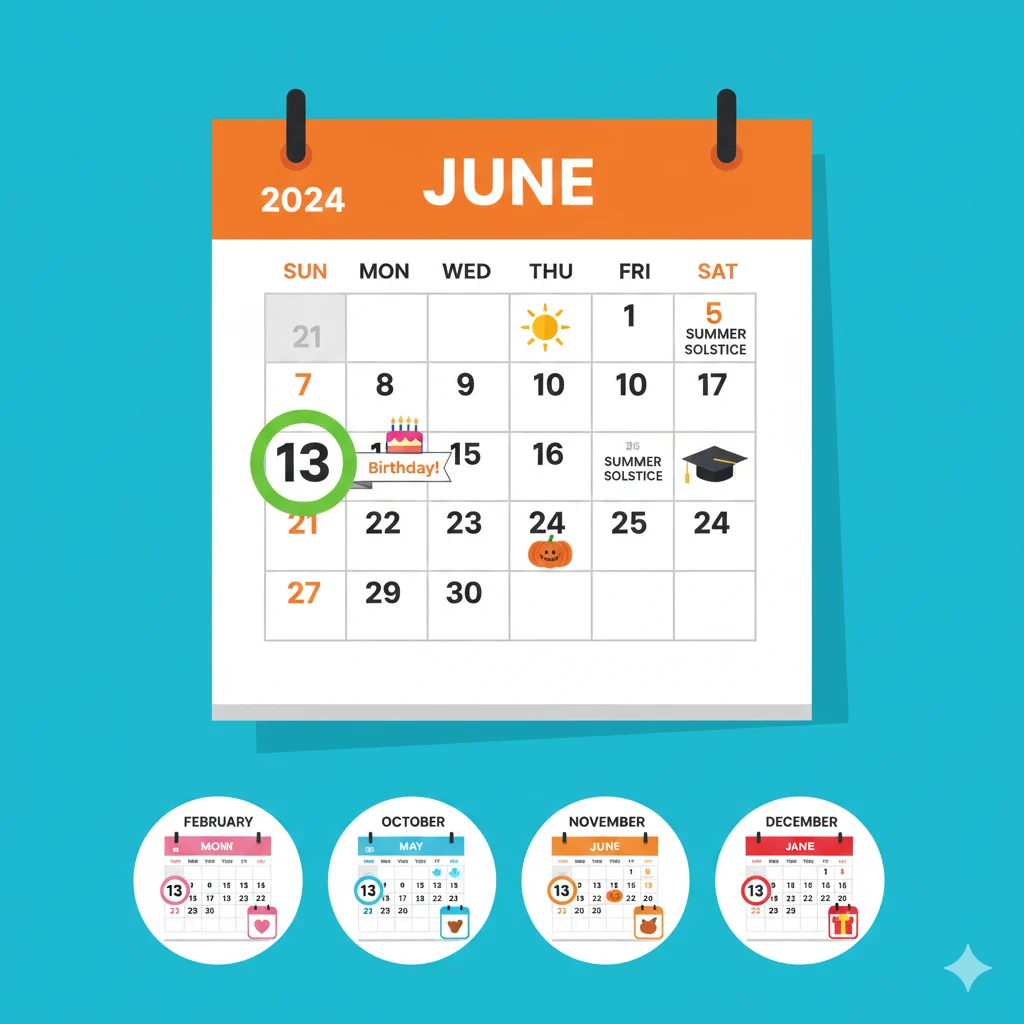
February 13th or 13rd:
- Correct: “Valentine’s special event is on February 13th.”
May 13th or 13rd:
- Correct: “The festival will take place on May 13th.”
October 13th or 13rd:
- Correct: “Halloween preparations start on October 13th.”
November 13th or 13rd:
- Correct: “The conference begins on November 13th.”
December 13th or 13rd:
- Correct: “The year-end report is due on December 13th.”
Month-by-Month Examples: June, February, May… 🗓️
| Month | Correct Example | Incorrect Example |
|---|---|---|
| June | Our wedding anniversary is on June 13th | Our wedding anniversary is on June 13rd |
| February | Valentine’s special event is on February 13th | Valentine’s special event is on February 13rd |
| May | The festival is on May 13th | The festival is on May 13rd |
| October | Halloween prep starts on October 13th | Halloween prep starts on October 13rd |
| November | Conference begins on November 13th | Conference begins on November 13rd |
| December | Year-end report due on December 13th | Year-end report due on December 13rd |
Cheezy Reminder: “Whenever you see 13 → teen = -th!” 🎯
Birthday Examples
- Correct: “My 13th birthday is next week.”
- Incorrect: “My 13rd birthday is next week.”
- Correct: “She celebrated her 13th birthday with friends.”
- Incorrect: “She celebrated her 13rd birthday with friends.”
Tip: Use 13th birthday in invitations, social media posts, and formal announcements.
Common Mistakes to Avoid: 13rd in Everyday Writing ❌
People often write 13rd by mistake:
- Social Media: “Can’t wait for my 13rd birthday 🎉” ❌
- Emails: “Submit by June 13rd” ❌
- School assignments: “Project deadline: May 13rd” ❌
✅ Correct Version: Always replace 13rd → 13th.
Quick Tip: Bookmark this rule: “1st, 2nd, 3rd → st, nd, rd | 11–13 → th | All others → th”
🧠 Easy Trick to Remember
If the number ends in:
- 11, 12, 13 → always use th
Even if it looks like it ends in 1, 2, or 3.
Example:
- 13th birthday
- 13th anniversary
- 13th floor
Never 13rd.
13rd vs 13th in Everyday Usage
Emails:
- Correct: “Please submit the report by June 13th.”
- Incorrect: “Please submit the report by June 13rd.”
News articles:
- Correct: “The event will take place on October 13th.”
Social media:

- Correct: “Can’t wait for my 13th birthday party 🎉!”
Formal writing:
- Correct: “The contract is valid until February 13th, 2026.”
School assignments:
- Correct: “Our project deadline is May 13th.”
Easy Memory Trick to Never Forget 13th 🧠
Mnemonic:
- Numbers ending in 11, 12, 13 → always -th
- Only 1, 2, 3 outside teens → -st, -nd, -rd
Examples:
- 13th birthday
- 13th anniversary
- 13th floor
Social Media Examples:
Mark your calendars: June 13th, 2026 ✅
🎉 Can’t wait for my 13th birthday! #13thBirthday
FAQ: 13rd vs 13th
Q1: Do we say 13th or 13rd?
- Always say 13th.
Q2: Is it correct to say 13th?
- ✅ Yes, it is the only correct form.
Q3: Is it June 13th or 13th June?
- ✅ Both are correct depending on US vs UK format.
Q4: Is it December 13th or 13th December?
- ✅ December 13th (US) / 13th December (UK).
Q5: Can we write 12th or 13rd?
- ❌ No, correct: 12th or 13th.
Google Trends & Usage Data
| Keyword Variation | Avg Monthly Searches | Popularity |
|---|---|---|
| 13th June | 18,000 | High |
| 13rd June | 900 | Very Low |
| 13th birthday | 15,000 | High |
| 13rd birthday | 200 | Very Low |
| November 13th | 12,000 | High |
| November 13rd | 150 | Very Low |
Insights: Searches for 13rd are extremely low, while 13th dominates globally. This confirms correct usage across all English dialects.
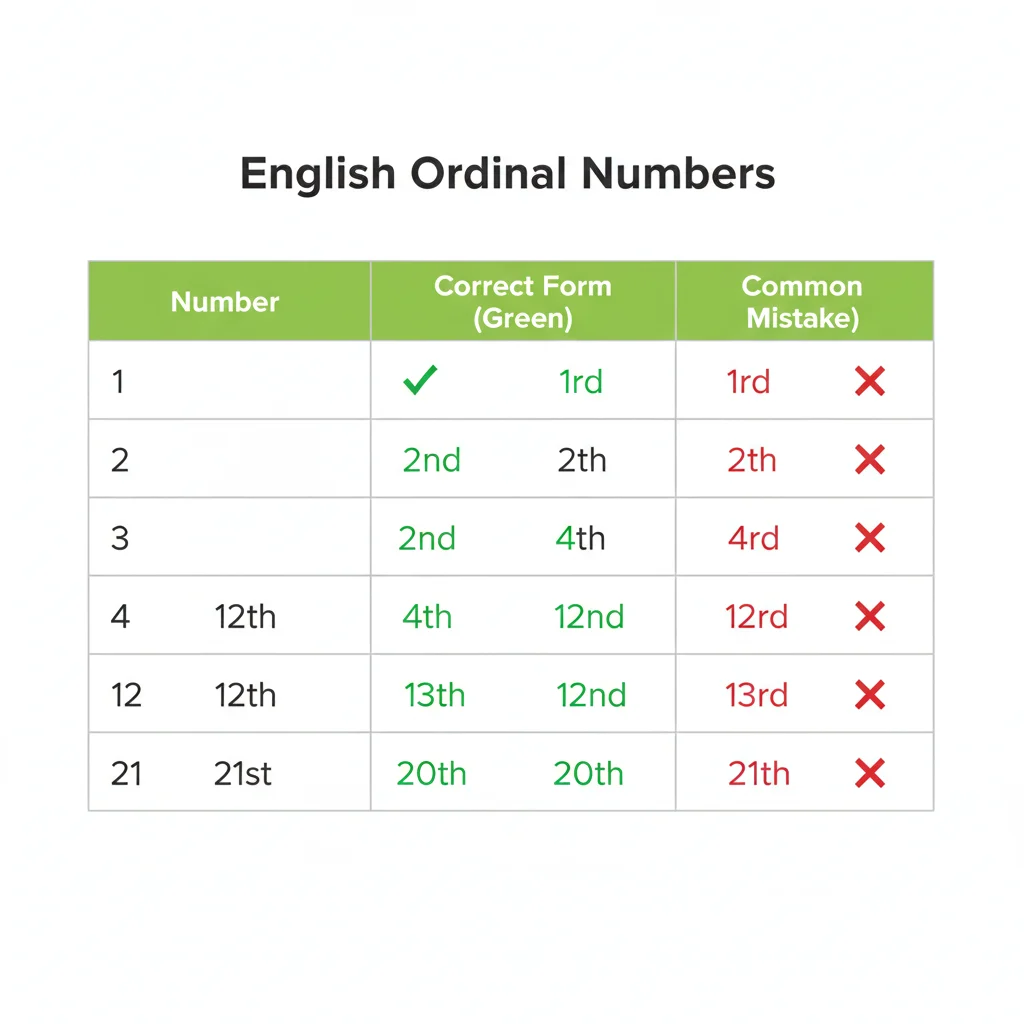
Comparison Table
| Ordinal | Correct Form | Common Mistake |
|---|---|---|
| 1 | 1st | 1th |
| 2 | 2nd | 2th |
| 3 | 3rd | 3th |
| 4 | 4th | 4rd |
| 12 | 12th | 12rd |
| 13 | 13th | 13rd |
| 20 | 20th | 20rd |
| 21 | 21st | 21th |
Conclusion
In conclusion, the correct usage is always 13th, never 13rd. Miswriting ordinals is common but easily corrected by remembering the simple rule: 1st, 2nd, 3rd → -st, -nd, -rd; all others → -th. Whether writing June 13th or 13th June, October 13th, or 12th or 13th, sticking to 13th ensures clarity and professionalism.
This knowledge is essential for writing emails, formal documents, social media posts, school assignments, and news articles. By following British and American conventions, you can address your audience accurately while avoiding common mistakes. Understanding 13rd vs 13th helps your writing stay credible and grammatically correct, making your communication precise and reader-friendly.

E.M. Forster was an English novelist celebrated for his insightful stories about class, connection, and humanity, blending gentle humor with deep social themes.