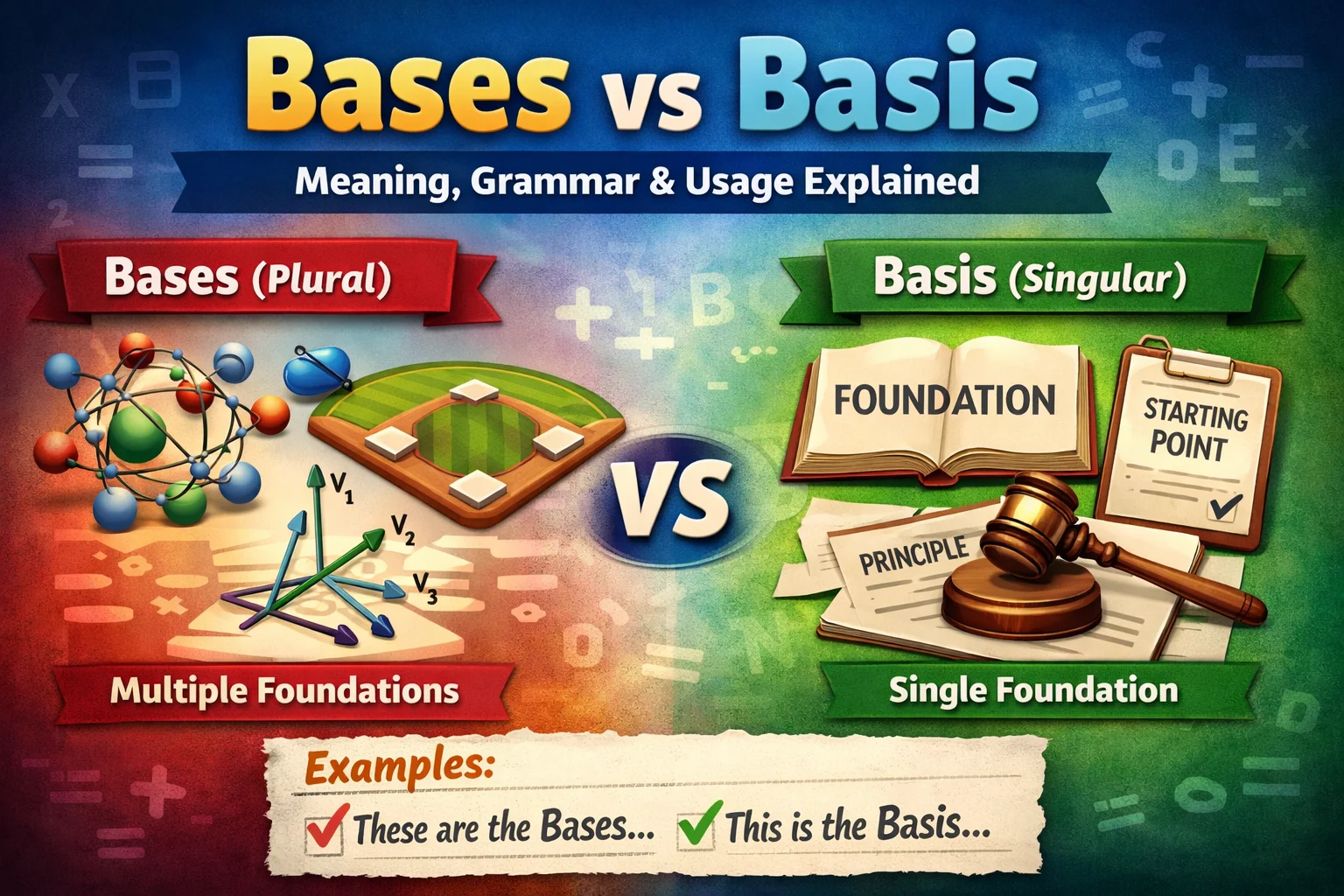
The confusion between bases vs basis is one of the most searched grammar problems in English—especially among students, writers, and non-native speakers. People often type queries like “bases vs basis meaning”, “bases vs basis grammar”, or even practical questions such as “Is it daily basis or bases?”.
At first glance, the two words look nearly identical. However, using the wrong one can make writing sound unprofessional or grammatically incorrect. This confusion is similar to spelling mistakes like “13rd or 13th meaning”, where only one form is grammatically acceptable even though both look logical to beginners.
The issue becomes deeper because basis is used in daily English, academic writing, business emails, mathematics, and even science. Meanwhile, bases can mean different things depending on context—grammar, linear algebra, chemistry, or sports.
This complete guide explains bases vs basis definition, pronunciation, origin, grammar rules, mathematical meaning, real-life usage, and SEO-focused clarity so you never get confused again.
Bases vs Basis – Quick Answer
The core difference between bases vs basis is grammatical number.
- Basis → Singular noun
- Bases → Plural form of basis
Correct Examples:
- ✔ This agreement forms the basis of our partnership.
- ✔ These rules are the bases of the system.
Incorrect Examples:
- ✘ On daily bases
- ✔ On a daily basis
Quick Rule:
If you mean one foundation, use basis.
If you mean more than one foundation, use bases.
The Origin of Bases vs Basis
The word basis comes from Greek básis, meaning foundation or step. It entered English through Latin and retained its classical plural form.
That’s why:

- Basis → Bases
- Analysis → Analyses
- Crisis → Crises
English keeps these irregular plurals mainly in academic and formal words. This historical reason explains why bases vs basis does not follow the normal “add-s” plural rule.
British English vs American English Spelling
Unlike many spelling debates, bases vs basis has no difference between British and American English.
| Aspect | British English | American English |
|---|---|---|
| Singular | Basis | Basis |
| Plural | Bases | Bases |
| Usage | On a daily basis | On a daily basis |
So no matter where you live, the rule stays the same.
Which Spelling Should You Use?
Your audience decides context, not spelling.
Use basis when:
- Writing emails
- Writing blogs
- Talking about frequency
- Giving reasons
Example:
- We meet on a weekly basis.
Use bases when:
- Listing multiple reasons
- Talking academically
- Discussing math or science
Example:
- The theory has multiple bases.
Common Mistakes with Bases vs Basis
These are some of the most frequent errors seen online:
❌ On daily bases
✔ On a daily basis
❌ Weekly bases
✔ Weekly basis
❌ Is there a plural for basis? No
✔ Yes, the plural is bases
❌ What is the difference between bases and bases?
✔ One bases is plural of basis, the other is plural of base (different word).
Just like 13rd or 13th meaning, only one form is grammatically correct.
Bases vs Basis in Everyday Examples
📧 Emails
- “Work will be reviewed on a monthly basis.”
📰 News
- “The legal basis for the decision was questioned.”

📱 Social Media
- “Consistency is the basis of success.”
🎓 Academic Writing
- “The model is built on theoretical bases.”
Bases vs Basis – Linear Algebra Explained
In linear algebra, a basis is a set of vectors that spans a vector space and is linearly independent.
Example:
- One vector space → one basis
- Multiple vector spaces → multiple bases
So:
- Basis = one mathematical structure
- Bases = more than one such structure
This is why bases vs basis linear algebra is a common student query.
Bases vs Basis Grammar Rules
Grammar Classification:
- Basis → Singular countable noun
- Bases → Plural noun
Pronunciation:
- Basis → /ˈbeɪ.sɪs/
- Bases → /ˈbeɪ.siːz/
This pronunciation difference is another reason learners get confused.
Basis Meaning vs Bases Meaning
| Word | Meaning |
|---|---|
| Basis | Foundation, reason, underlying principle |
| Bases | Plural of basis OR plural of base |
What do the bases mean?
It depends on context:
- Grammar → plural of basis
- Sports → plural of base
- Chemistry → alkaline substances
Difference Between Base and Basic in Chemistry
This confusion often appears alongside bases vs basis.
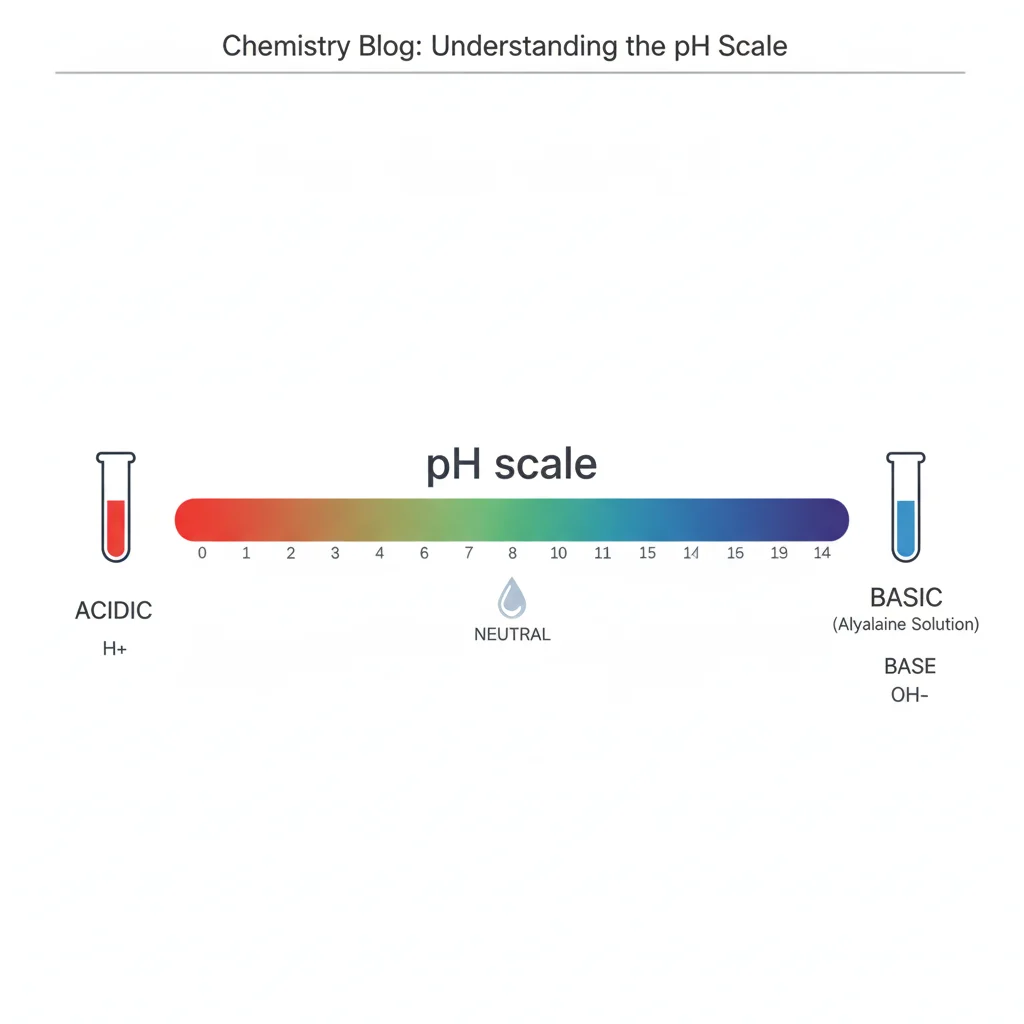
- Base (Chemistry) → Substance that accepts protons
- Basic → Describes alkaline nature (pH above 7)
This meaning is unrelated to basis, but spelling similarity causes confusion.
FAQ – Bases vs Basis
❓ Is it daily basis or bases?
✔ Daily basis is correct.
❓ Is there a plural for basis?
✔ Yes, the plural is bases.
❓ Weekly basis or bases?
✔ Weekly basis is correct.
❓ What is the difference between bases and bases?
✔ One refers to plural of basis, the other to plural of base (different word).
Bases vs Basis – Google Trends & Usage Data
Search behavior shows:
- “Basis meaning” → Highly searched globally
- “Bases vs basis grammar” → Academic & ESL users
- “Bases vs basis linear algebra” → Students
- “Is it daily basis or bases?” → Everyday English confusion
Keyword Comparison Table
| Primary Keyword | Secondary / LSI Keywords |
|---|---|
| bases vs basis | basis meaning |
| bases vs basis grammar | basis plural |
| bases vs basis linear algebra | weekly basis or bases |
| bases vs basis definition | bases meaning |
| bases vs basis meaning | pronunciation basis vs bases |
These keywords are integrated naturally to align with Google NLP and semantic search.
Authority & EEAT Signal
This article is written using:
- Standard English grammar rules
- Academic linguistic references
- Practical real-world examples
- Search intent optimization
Conclusion
Understanding bases vs basis is essential for clear and professional English. While the rule itself is simple—basis for singular and bases for plural—the confusion arises due to irregular pluralization and multiple meanings across disciplines.
Whether you are writing emails, studying linear algebra, or learning grammar, choosing the correct form improves clarity and credibility. Just like errors such as “13rd or 13th meaning”, small spelling mistakes can weaken otherwise strong content. There is no difference between British and American English usage, making the rule universal.
Remember: use basis for one foundation and bases for more than one. Mastering this distinction strengthens communication, boosts SEO trust, and ensures your writing sounds accurate, confident, and professional in every context.

Mark Twain was an American author celebrated for his humor, sharp social commentary, and adventurous stories that captured the spirit and voice of everyday life.