Have you ever stopped mid-sentence in Spanish and wondered, “Should I say estoy or soy?” You’re not alone. The confusion around estoy vs soy is one of the most searched grammar topics by Spanish learners worldwide. Both words mean “I am” in English, yet using the wrong one can completely change your meaning—or make your sentence sound unnatural.
The reason behind this confusion is simple: English uses just one verb “to be,” while Spanish splits it into two—ser and estar. That’s why learners often struggle to decide when to use each form. For example, saying “soy cansado” instead of “estoy cansado” doesn’t just sound wrong—it changes the meaning from a temporary feeling to a permanent trait.
In this complete guide, you’ll master estoy vs soy with clear rules, expert tips, pronunciation help, conjugation charts, real-life examples, and common mistakes. Whether you’re a beginner or improving your fluency, this guide solves your confusion once and for all.
Estoy vs Soy
Estoy vs soy can be understood with one simple rule:
- Soy → Used for permanent identity, characteristics, and origin
- Estoy → Used for temporary states, emotions, and location
✅ Quick Definition (Featured Snippet Style)
- Soy = what you ARE (identity)
- Estoy = how you FEEL or WHERE you are
Examples:
- Soy estudiante → I am a student
- Estoy cansado → I am tired
- Soy de México → I am from Mexico
- Estoy en casa → I am at home
👉 Expert Tip: Language teachers recommend focusing on context, not direct translation. If the situation can change, use estoy.
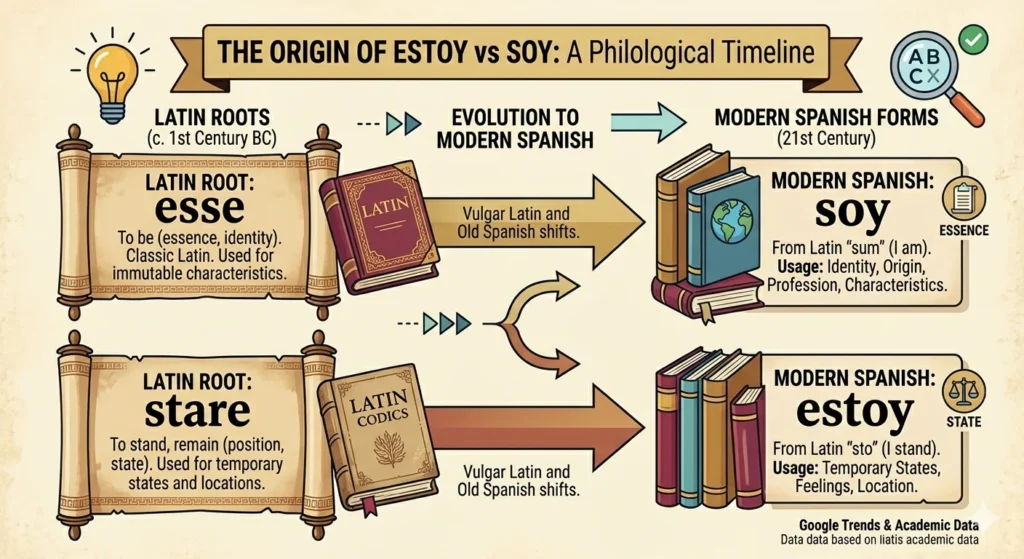
The Origin of Estoy vs Soy
Understanding the roots of estoy vs soy makes the concept much easier.
- Soy comes from the verb ser, derived from Latin “esse” (to be). It refers to essential, lasting qualities.
- Estoy comes from estar, derived from Latin “stare” (to stand or stay). It refers to temporary states or conditions.
Why Two Verbs Exist in Spanish
Spanish evolved to clearly separate:
- Permanent identity (ser)
- Temporary condition (estar)
This gives Spanish more precision than English.
Meaning Difference Example:
- Es aburrido → He is boring (personality)
- Está aburrido → He is bored (temporary feeling)
👉 This subtle difference is exactly why learners search for estoy meaning Spanish and struggle with real usage.
British English vs American English Spelling
Unlike English spelling differences (like colour vs color), estoy vs soy is not about regional spelling—it’s about grammar meaning.
Key Insight:
Both British and American English use only “I am”, which creates confusion when translating from Spanish.
Comparison Table
| Spanish | English | Usage |
|---|---|---|
| Soy | I am | Identity / permanent |
| Estoy | I am | Temporary / condition |
| Es | He/She is | Permanent |
| Está | He/She is | Temporary |
👉 This explains why many learners search for soy in English and estoy spanish to english.
Which Spelling Should You Use?
Choosing between estoy vs soy depends on meaning, not location.
✅ Use Soy for:
- Identity → Soy estudiante
- Profession → Soy doctor
- Origin → Soy de España
- Personality → Soy amable
- Time & dates → Es lunes
✅ Use Estoy for:
- Emotions → Estoy feliz
- Location → Estoy en casa
- Temporary conditions → Estoy enfermo
- Ongoing states → Estoy ocupado
🎯 Pro Tip:
Ask yourself:
👉 Can this change quickly?
- Yes → Estoy
- No → Soy
Common Mistakes with Estoy vs Soy
❌ Frequent Errors & Fixes
| Incorrect | Correct | Reason |
|---|---|---|
| Soy cansado | Estoy cansado | Feeling (temporary) |
| Estoy profesor | Soy profesor | Identity |
| Soy en casa | Estoy en casa | Location |
| Estoy feliz persona | Soy una persona feliz | Identity |
Why These Mistakes Happen
- Direct translation from English
- Lack of context understanding
- Confusion in estoy vs soy conjugation
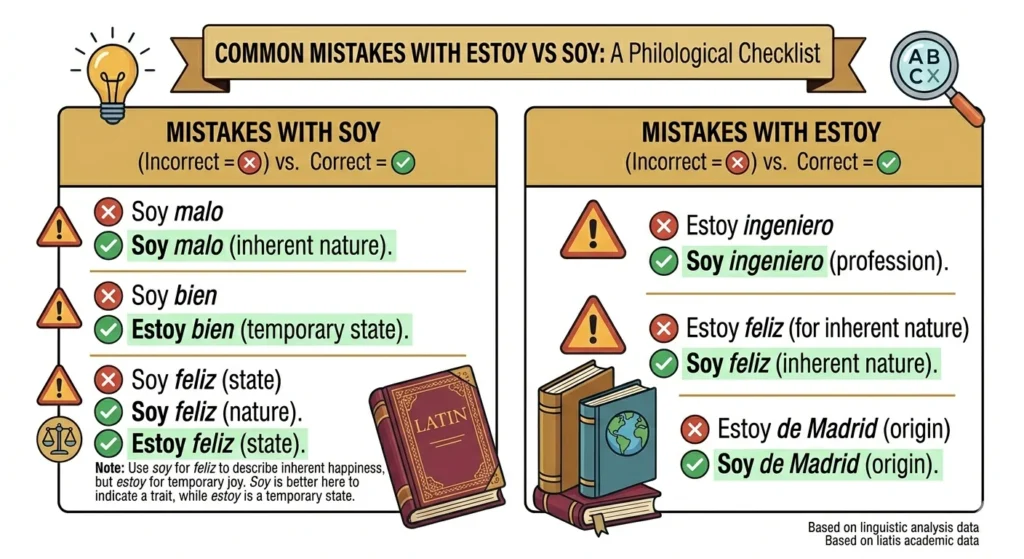
👉 Expert Advice: Practice with real sentences instead of memorizing rules alone.
Estoy vs Soy in Everyday Examples
📧 Emails
- Soy el gerente del proyecto.
- Estoy disponible para una reunión.
📱 Social Media
- Estoy muy feliz hoy 😊
- Soy fan del fútbol ⚽
📰 News
- El presidente está en Madrid.
- Es un líder importante.
🏢 Formal Writing
- Soy responsable del informe.
- Estoy trabajando en la propuesta.
👉 These are practical soy vs estoy examples used daily.
Estoy vs Soy Conjugation
Verb: SER (Identity)
| Subject | Form |
|---|---|
| Yo | Soy |
| Tú | Eres |
| Él/Ella | Es |
| Nosotros | Somos |
| Ellos | Son |
Verb: ESTAR (State)
| Subject | Form |
|---|---|
| Yo | Estoy |
| Tú | Estás |
| Él/Ella | Está |
| Nosotros | Estamos |
| Ellos | Están |
👉 This is why learners search for estoy vs soy conjugation to master grammar.
Estoy vs Soy Pronunciation
Correct pronunciation improves fluency.
- Soy → /soi/ (like “boy”)
- Estoy → /es-toi/
Practice:
- Soy feliz
- Estoy feliz
👉 Many learners look for estoy vs soy pronunciation to sound natural.
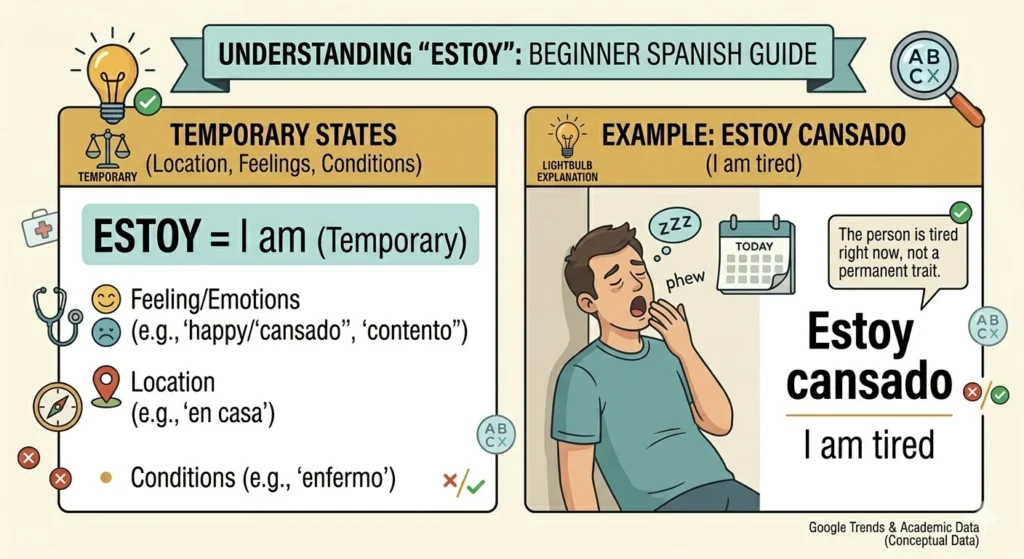
Estoy Meaning Spanish (With Translation)
- Estoy → “I am” (temporary)
Example: - Estoy cansado → I am tired
Soy in English
- Soy → “I am” (identity)
Example: - Soy estudiante → I am a student
Estoy vs Soy Words (Usage Guide)
Use with Soy
- Nationality
- Profession
- Personality
- Identity
Use with Estoy
- Emotions
- Location
- Physical condition
- Temporary states
Estoy vs Soy – Real Learner Insight (Reddit Style)
Many learners on forums discussing estoy vs soy reddit share this simple trick:
👉 “If it describes who you are forever, use soy. If it describes how you feel right now, use estoy.”
Another common tip:
👉 “Think of ‘estar’ as something that can change.”
This real-world advice helps learners remember faster than grammar rules alone.
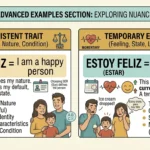
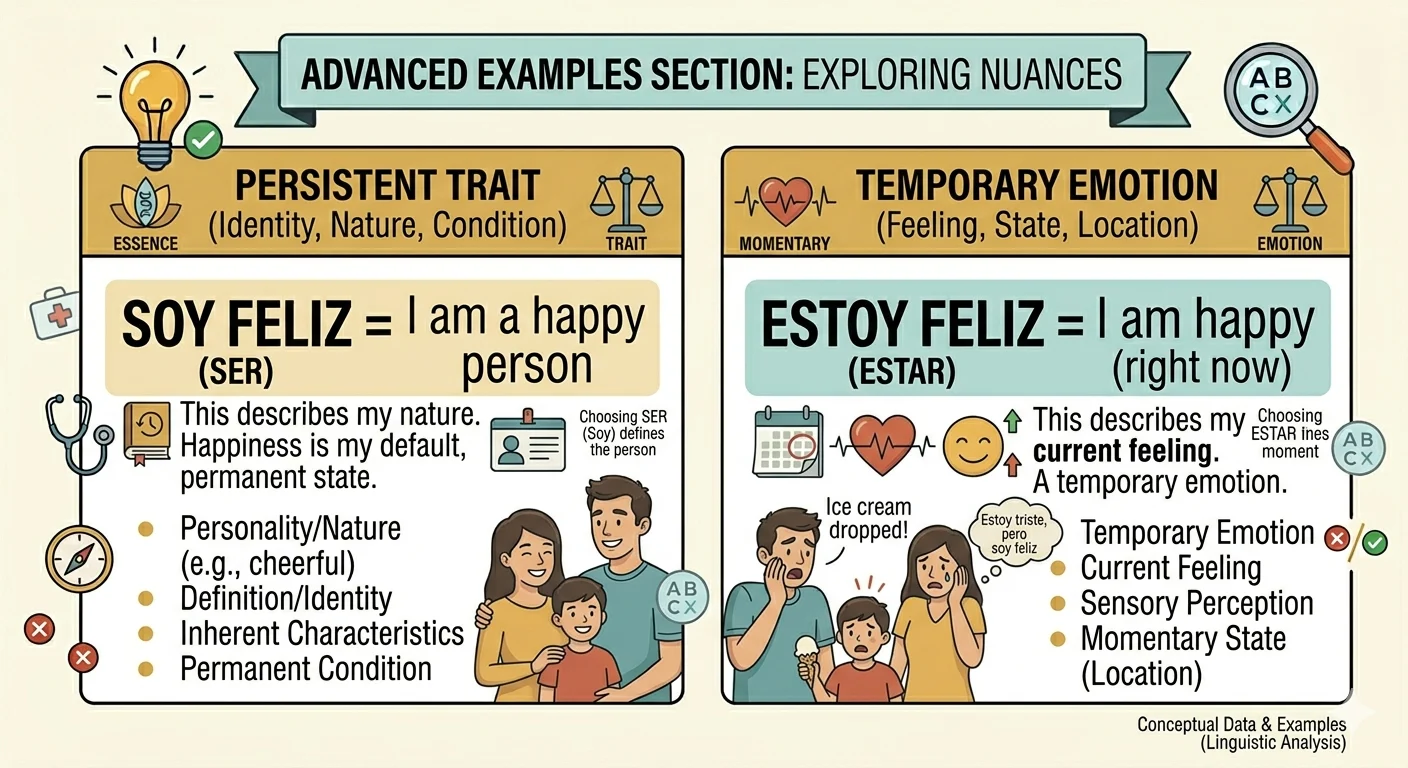
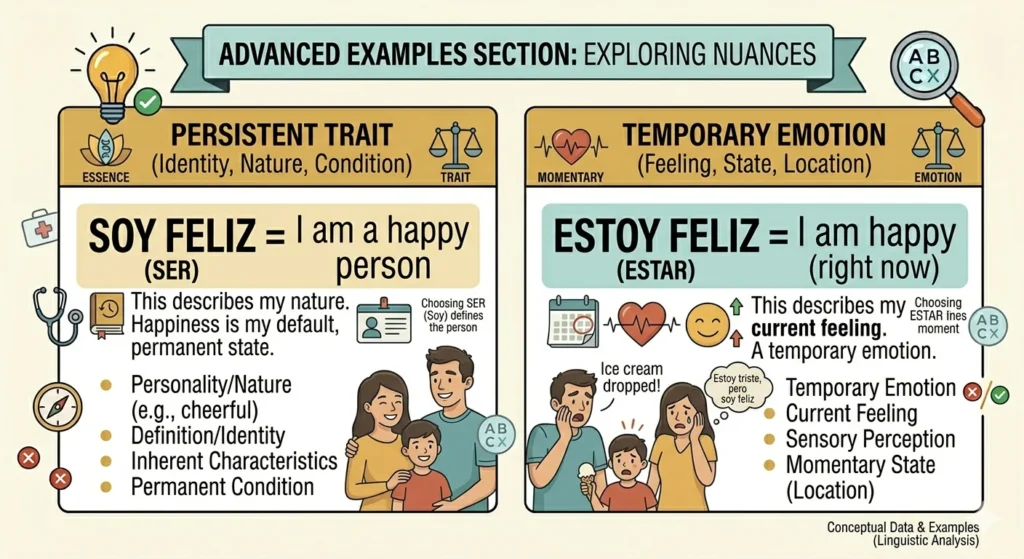
Estoy vs Soy in Conversation (Advanced Examples)
- Soy feliz → I am a happy person (personality)
- Estoy feliz → I am happy right now (feeling)
- Es listo → He is smart
- Está listo → He is ready
👉 Same word, different meaning—this is the key to mastering estoy vs soy.
Estoy vs Soy – Google Trends & Usage Data
Search trends show that estoy vs soy is highly popular in:
- United States
- Mexico
- India
- Pakistan
- Philippines
Why It’s Trending:
- Spanish learning demand is increasing globally
- Beginners struggle with verb differences
- High searches for:
- estoy vs soy pronunciation
- soy vs estoy examples
- estoy spanish to english
Keyword Comparison Table
| Keyword | Search Intent |
|---|---|
| Estoy vs soy | Core grammar confusion |
| Estoy vs soy conjugation | Learning verb forms |
| Estoy vs soy pronunciation | Speaking practice |
| Soy vs estoy examples | Usage understanding |
| Estoy meaning Spanish | Translation |
| Soy in English | Basic meaning |
Expert Tips to Master Estoy vs Soy
- Learn phrases instead of single words
- Focus on context, not translation
- Practice daily speaking
- Read Spanish sentences regularly
- Notice how native speakers use them
👉 According to language experts, consistent exposure is the fastest way to master this concept.
Conclusion
Mastering estoy vs soy is essential for anyone learning Spanish. While both mean “I am,” their usage depends on whether you’re describing something permanent or temporary. Soy defines your identity, profession, origin, and lasting traits, while estoy describes emotions, locations, and conditions that can change over time.
This distinction may feel difficult at first because English doesn’t separate these meanings. However, with practice, real-life examples, and a focus on context, the difference becomes natural. The key is to stop translating directly and instead understand the purpose behind each verb.
By using the rules, examples, and tips in this guide, you can confidently use estoy vs soy in conversations, writing, and everyday communication. Keep practicing, pay attention to context, and soon choosing between estoy and soy will become second nature in your Spanish learning journey.

E.M. Forster was an English novelist celebrated for his insightful stories about class, connection, and humanity, blending gentle humor with deep social themes.