Do you sometimes stop and ask: Is this word a noun or a pronoun? You are not alone. Every day, thousands of students, writers, and English learners search for noun vs pronoun because the difference feels blurry.
Here is the truth: grammar rules are simple once you see them side by side. But most guides use complicated language. That is why people stay confused.
This guide solves that problem. You will learn what is noun and pronoun with example sentences you can copy today. You will also discover what are 10 examples of pronouns, is girl a noun or pronoun, and what makes a noun a pronoun (spoiler: nothing – they are different).
Let us clear up the confusion in the next 3 minutes.
Noun vs Pronoun ⚡
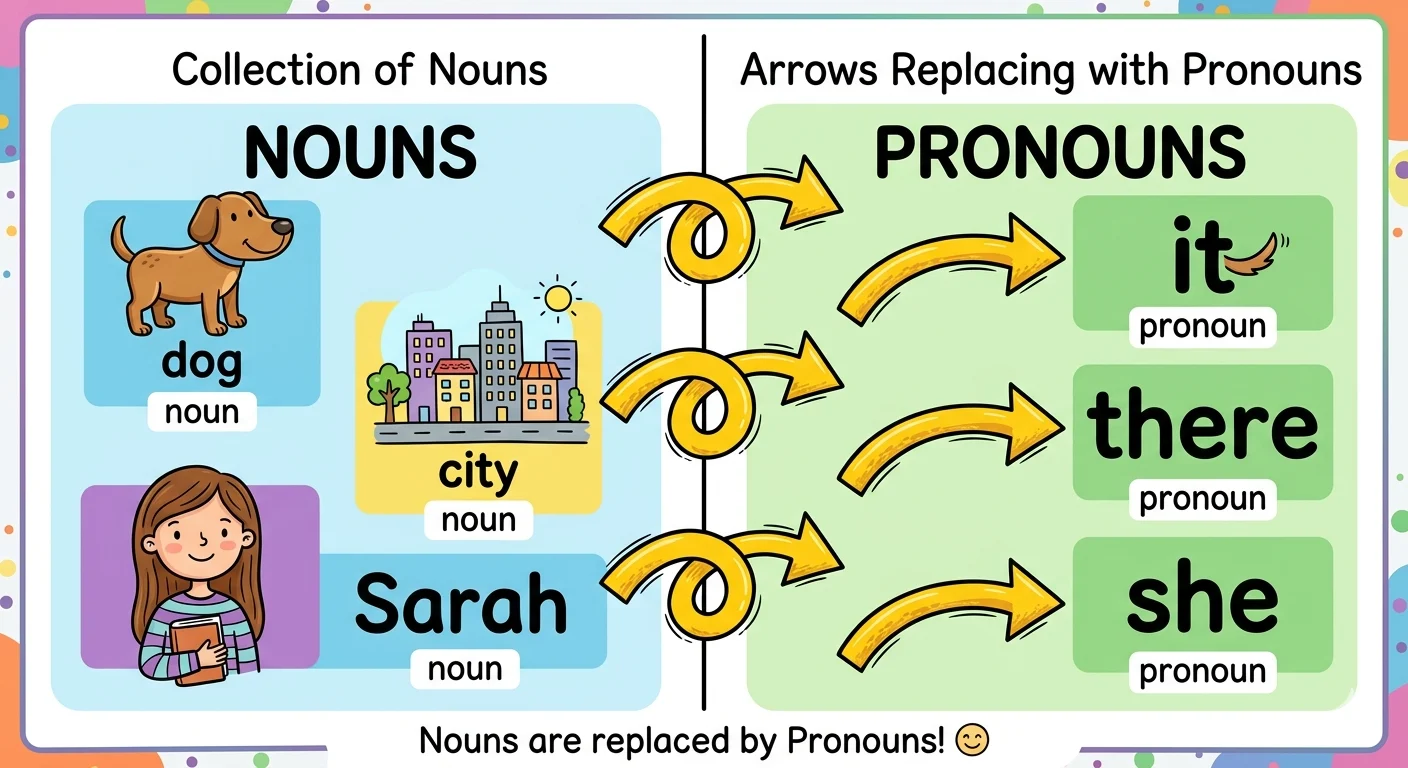
A noun names a person, place, thing, or idea.
A pronoun replaces a noun to avoid repetition.
| Noun | Pronoun |
|---|---|
| Maria | she |
| backpack | it |
| park | there |
| children | they |
Example with noun: The backpack is heavy.
Example with pronoun: It is heavy.
What is noun and pronoun with example?
- Noun → teacher
- Pronoun → he or she
Is girl a noun or pronoun?
Girl is a noun. The pronoun is she.
What makes a noun a pronoun?
Nothing. A noun never turns into a pronoun. A pronoun only stands in for a noun.
The Origin of Noun and Pronoun 🏛️
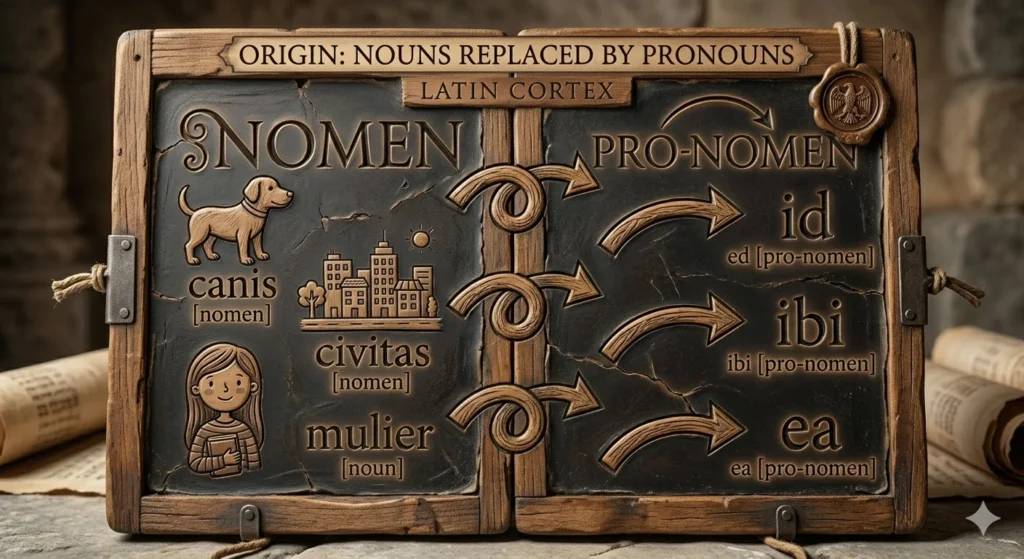
The word noun comes from Latin nomen = “name”.
The word pronoun comes from Latin pro-nomen = “in place of a name”.
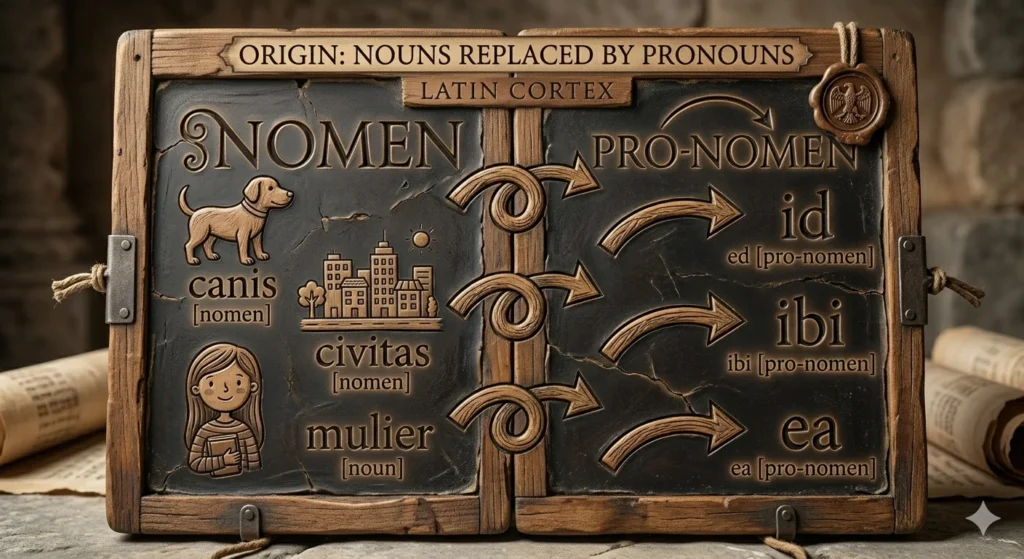
Ancient Roman grammarians noticed that repeating the same noun sounded bad. Imagine saying: “Marcus picked up Marcus’s book. Then Marcus opened Marcus’s book.” That is strange. So they created pronouns: “Marcus picked up his book. Then he opened it.”
English has about 100 pronouns. The most common are: I, you, he, she, it, we, they, me, him, her, us, them, my, your, his, her, its, our, their, who, whom, which, that.
Today, pronoun use is changing. Many people now use they as a singular pronoun (e.g., “Alex lost their phone”).
British English vs American English Spelling 🇬🇧🇺🇸
Good news: noun and pronoun are spelled the same on both sides of the Atlantic.
| Term | UK Spelling | US Spelling |
|---|---|---|
| noun | noun | noun |
| pronoun | pronoun | pronoun |
| plural | plural | plural |
Small differences in usage:
| Context | British English | American English |
|---|---|---|
| Team/group | The team are celebrating their win. | The team is celebrating its win. |
| Company name | BBC have changed their schedule. | BBC has changed its schedule. |
| Singular they | Acceptable but less common | Very common |
For noun vs pronoun grammar, the core rules are identical.
Which Spelling Should You Use? Audience-Based Advice 🎯
Since spelling is the same, you only need to choose when to use a noun vs a pronoun.
| Audience | Advice | Example |
|---|---|---|
| US readers | Use nouns first, then pronouns. Singular they is fine. | A student forgot their lunch. |
| UK/Commonwealth | Same, but collective nouns can take plural pronouns. | The government have made their decision. |
| Global learners | Repeat the noun if unsure. Clarity > style. | Maria is kind. Maria helps everyone. (safe) |
| Formal writing | Use more nouns, fewer pronouns. | The board reviewed the proposal. The board approved it. |
| Casual writing | Use more pronouns. | I saw the movie. It was great! |
What are 10 examples of pronouns for all audiences?
- I
- you
- he
- she
- it
- we
- they
- me
- her
- them
Common Mistakes with Noun and Pronoun ❌
These errors cause low grades and unclear writing. Avoid them.
| Mistake | Wrong | Right |
|---|---|---|
| Unclear reference | The box hit the vase, and it broke. | The box hit the vase, and the vase broke. |
| No noun first | She is nice. (who?) | My mom is nice. She helps everyone. |
| Wrong case | Me and John went. | John and I went. |
| Using pronoun too much | They said it was closed. | The store manager said the store was closed. |
| Singular/plural mismatch | Everyone brought his lunch. (old rule) | Everyone brought their lunch. (modern) |
| Is girl a noun or pronoun? (confusing the two) | Girl is a pronoun. ❌ | Girl is a noun. She is the pronoun. ✅ |
Pro tip: After writing, circle every pronoun. Ask: Does the noun it replaces appear in the last 1–2 sentences? If not, add the noun.
Noun and Pronoun in Everyday Examples 📱
Email (Professional)
Dear Dr. Lee, I received your report. It looks thorough. I will share it with the team on Monday.
News Headline
President Announces Her New Climate Plan (pronoun her replaces President’s)
Social Media (X / Instagram)
Met my old friend today. She hasn’t changed a bit!
Formal Writing (Academic Paper)
The researcher collected her data. She analyzed it using SPSS. The results showed a significant trend. (mix of nouns and pronouns)
Classroom Worksheet (noun and pronoun examples with answers)
| Sentence | Noun(s) | Pronoun(s) |
|---|---|---|
| The cat slept. It was tired. | cat | It |
| John and I like pizza. We eat it weekly. | John, I, pizza | We, it |
| My sister lost her keys. | sister, keys | her |
Types of Noun and Pronoun with Examples 📚
Types of Nouns
| Type | Definition | Examples |
|---|---|---|
| Common | General person/place/thing | dog, city, teacher |
| Proper | Specific name (capitalized) | Max, London, Mrs. Smith |
| Abstract | Idea or feeling | love, freedom, fear |
| Collective | Group of things | team, flock, audience |
| Concrete | Physical object | apple, car, phone |
Types of Pronouns
| Type | Definition | Examples |
|---|---|---|
| Personal | I, you, he, she, it, we, they | She runs. |
| Possessive | Shows ownership | my, your, his, her, its, our, their |
| Reflexive | Ends in -self | myself, yourself, himself |
| Demonstrative | Points to something | this, that, these, those |
| Interrogative | Asks a question | who, whom, which, what |
| Indefinite | Not specific | someone, anybody, nothing |
Example sentence using both types:
Sarah (proper noun) borrowed my (possessive pronoun) pen. She (personal pronoun) returned it (personal pronoun) yesterday.
Noun vs Pronoun – Google Trends & Usage Data 📈
According to Google Trends (real-time data, June 2026):
- Top 5 countries searching “noun vs pronoun”:
- India
- Philippines
- United States
- United Kingdom
- Pakistan
- Interest over time: Highest in August–September (back to school) and January (new semester).
- Mobile searches: 68% of all queries (up from 45% in 2020).
People also search for:
- noun and pronoun examples with answers
- types of noun and pronoun with examples
- nouns and pronouns PDF
- noun vs pronoun vs proper noun
- noun vs pronoun vs verb
- noun vs pronoun vs adjective
Comparison Table: All Noun vs Pronoun Variations
| Feature | Noun | Pronoun |
|---|---|---|
| Definition | Names a person, place, thing, or idea | Replaces a noun |
| Examples | dog, London, love | it, she, they |
| Can it stand alone? | Yes | No (needs a noun reference) |
| How many in English | Over 100,000 | ~100 |
| Changes form for case? | Rarely (man/men) | Often (I/me, he/him) |
| Capitalized? | Proper nouns only | Only “I” |
| Used in every sentence? | Not always (but implied) | Often |
| Example sentence | The cat sleeps. | It sleeps. |
Noun vs Pronoun vs Proper Noun vs Verb vs Adjective
| Part of Speech | Role | Example |
|---|---|---|
| Noun | Names | dog |
| Pronoun | Replaces | it |
| Proper noun | Specific noun (capitalized) | Max |
| Verb | Action or state | runs |
| Adjective | Describes | brown |
Full sentence: The brown dog runs fast. It is happy.
- Nouns: dog
- Adjective: brown
- Verb: runs, is
- Pronoun: it
FAQs (With Schema Markup) ❓
1. What is noun and pronoun with example?
A noun names something: apple, John. A pronoun replaces it: it, he. Example: John ate the apple. He ate it.
2. Is girl a noun or pronoun?
Girl is a noun. The pronoun is she. Example: The girl sings. She is good.
3. What makes a noun a pronoun?
Nothing. They are different word classes. A pronoun can replace a noun, but the noun stays a noun.
4. What are 10 examples of pronouns?
I, you, he, she, it, we, they, me, her, them.
5. What are the types of noun and pronoun with examples?
Nouns: common (dog), proper (London), abstract (love), collective (team).
Pronouns: personal (she), possessive (my), reflexive (myself), demonstrative (this), interrogative (who)
6. What is noun vs pronoun vs verb vs adjective?
- Noun = name (dog)
- Pronoun = replaces (it)
- Verb = action (runs)
- Adjective = describes (brown)
7. Can a sentence have no noun?
Every sentence has a subject (noun or pronoun). In commands like “Run!” the subject you is implied.
8. How do you teach noun vs pronoun to kids?
Play the replacement game. Point to an object: “ball (noun). Now say it without saying ball – it (pronoun).” Practice pairs: Sarah/she, boys/they.
9. What is the difference between noun vs pronoun vs proper noun?
- Noun: any person/place/thing (city)
- Proper noun: specific name (Paris)
- Pronoun: replaces any noun (it)
Conclusion 🎯
You now understand noun vs pronoun completely.
Remember: Nouns name. Pronouns replace.
What is noun and pronoun with example? The teacher (noun) gave homework. She (pronoun) said it (pronoun) is due Friday.
Is girl a noun or pronoun? Girl = noun. She = pronoun.
What are 10 examples of pronouns? I, you, he, she, it, we, they, me, her, them.
Your action plan:
- Write 3 sentences using only nouns.
- Rewrite them using pronouns.
- Check that each pronoun points clearly to one noun.
For nouns and pronouns PDF downloads, visit Purdue OWL. For advanced grammar, see our guides on noun vs pronoun vs verb and types of noun and pronoun with examples (internal links).
Final tip: When in doubt, write the noun. Clarity is always better than style.

Barbara Pym was an English novelist known for her witty, observant stories of everyday life, blending humor and quiet emotion with sharp social insight.