In email terminology, people often confuse “CCD” and “CC’d”, but there’s a clear distinction. CC stands for “Carbon Copy”, used to send a copy of an email to someone besides the main recipient. The correct past-tense form is “CC’d”, meaning “was copied on the email”. Example: “I CC’d my manager on the project update email.”
On the other hand, “CCD” is incorrect in standard email usage and is often a typographical error or misunderstanding of CC. Using CC’d ensures proper grammar and professionalism in emails.
Remember: CC = present form, CC’d = past action, while CCD should be avoided. Correct usage improves clarity, professionalism, and ensures your emails are understood properly in business or academic communication.
CCD vs CC’d
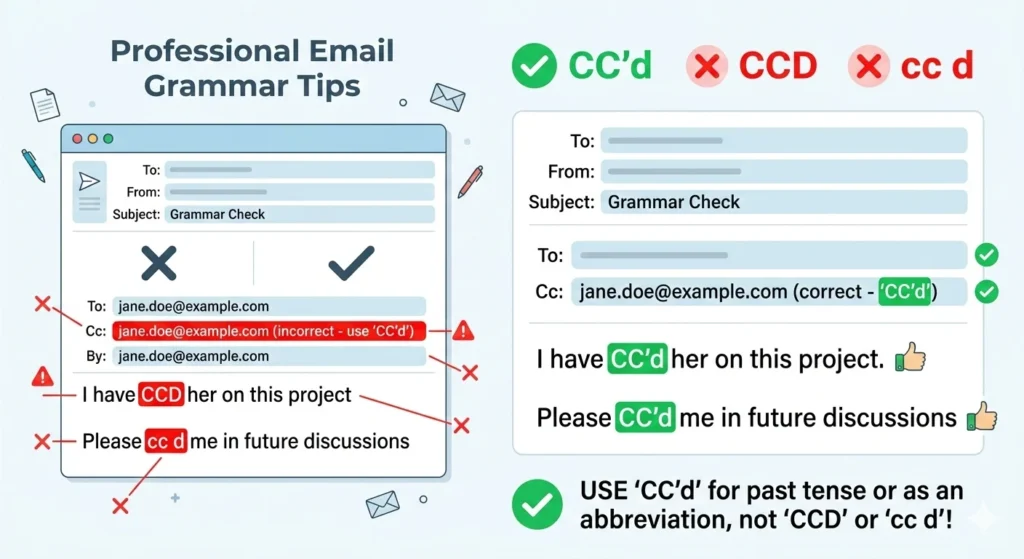
✅ Correct spelling: CC’d ❌ Incorrect spelling: CCD ❌ Incorrect spelling: cc d
What Does CC’d Mean?
CC’d is the past tense of CC, which stands for carbon copy. It means you included someone as a secondary recipient in an email.
Simple Examples
I have CC’d the manager on this email.
She CC’d the finance department.
Please note that the CEO was CC’d yesterday.
If you write:
I CCD him in the email.
That is grammatically incorrect.
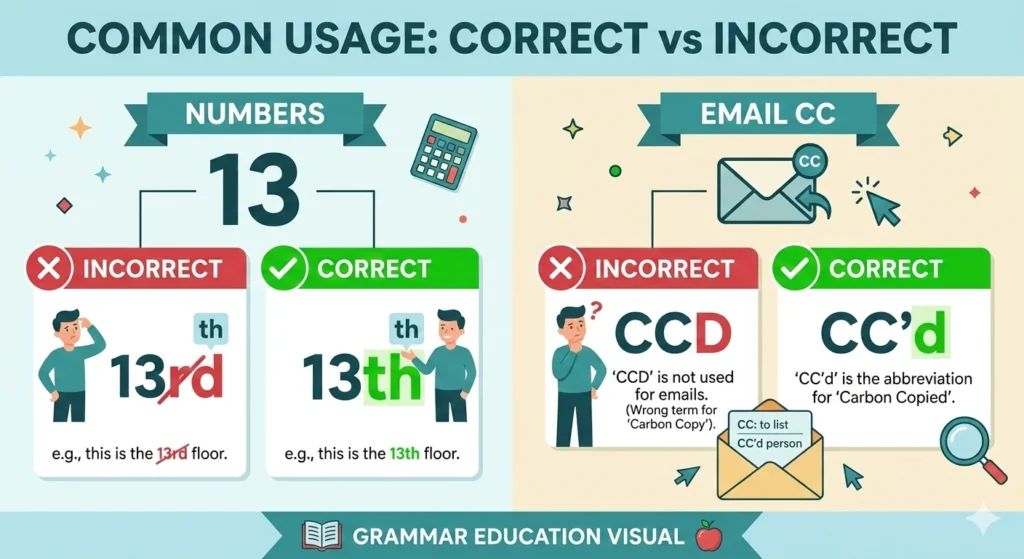
Just like writing 13rd instead of 13th, it breaks English rules.
To understand why CC’d is correct, we need to go back in time.
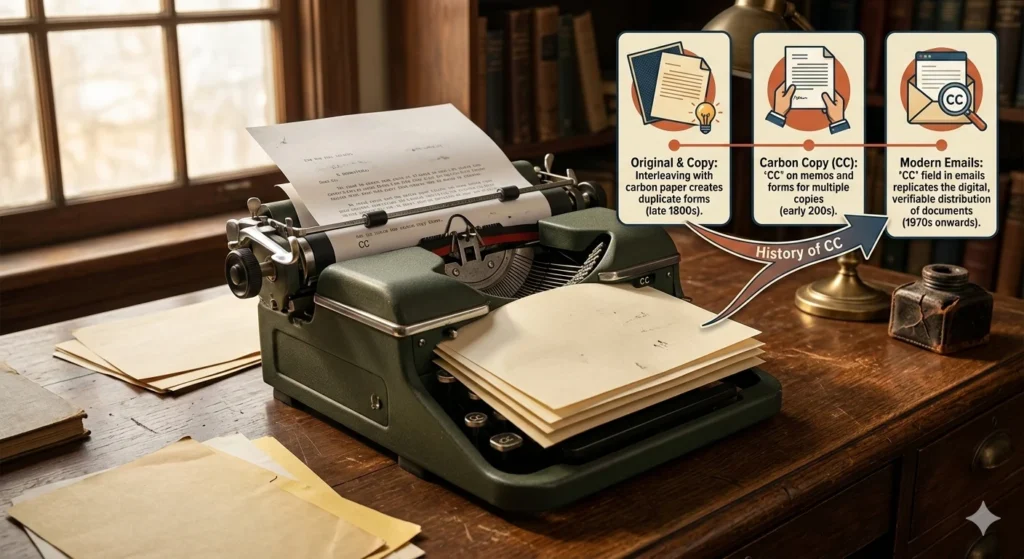
Before computers, people used carbon paper between sheets of paper in typewriters. This created duplicate copies automatically. The copy created underneath was called a carbon copy.
When email services like Microsoft Outlook and Google Gmail developed digital messaging systems, they kept the same term — CC — to indicate sending a copy to someone else.
So:
CC = Carbon Copy
When we turn “CC” into past tense, English grammar requires adding:
apostrophe + d
This is because “CC” is an abbreviation.
Why the Apostrophe Is Necessary
In English, when adding past tense to abbreviations, we use:
OK → OK’d
ID → ID’d
CC → CC’d
The apostrophe prevents confusion and keeps pronunciation clear.
Without the apostrophe:
CCd ❌ (looks wrong)
CCD ❌ (changes meaning)
That’s why CC’d is the only correct form in email writing.
British English vs American English Spelling
Unlike spelling differences such as:
Authorise vs Authorize
Cataloguing vs Cataloging
There is no difference between British and American English for CC’d.
Comparison Table
Feature
American English
British English
Present tense
CC
CC
Past tense
CC’d
CC’d
Without apostrophe
Incorrect
Incorrect
CCD in email
Incorrect
Incorrect
Both follow identical grammar rules.
Which Spelling Should You Use?
🇺🇸 United States
Always use CC’d in formal and business emails.
🇬🇧 United Kingdom
Use CC’d as well. No variation exists.
🇨🇦 🇦🇺 🇮🇳 🇵🇰 Commonwealth & Other Countries
Also use CC’d.
No matter where you write from, the rule does not change.
Common Mistakes with CCD vs CC’d
Let’s break down the most frequent errors.
Writing CCD Instead of CC’d
Incorrect:
I CCD you on this message.
Correct:
I CC’d you on this message.
Writing cc d with Space
Incorrect:
I have cc d the manager.
Correct:
I have CC’d the manager.
Forgetting Capitalization
Formal writing prefers:
I have CC’d the department.
Lowercase may appear in casual messages but is not ideal for professional communication.
In science or technology, CCD can mean something completely different. But in email writing, CCD is incorrect.
If you are talking about email grammar: Only use CC’d.
CCD vs CC’d and 13rd or 13th Meaning Rule
The grammar confusion is similar.
Correct:
13th
CC’d
Incorrect:
13rd
CCD
Both mistakes happen when proper suffix or punctuation rules are ignored.
English has structured rules for:
Ordinal numbers
Abbreviations
Contractions
Once you understand the pattern, the confusion disappears.
Primary Keywords Naturally Covered
CCD vs CC’d
CC’d on this email
Ccd vs cc d grammar
Is cc d capitalized
I have CC’d
Cc d full form
CC’d in a sentence
How to say you have CC’d someone in an email
Final Conclusion
The difference between CCD vs CC’d is simple but important. The correct spelling is CC’d, because it represents the past tense of the abbreviation “CC” (carbon copy) and requires an apostrophe before the “d.” Writing CCD, CC d, or CCd is incorrect in professional communication.
This rule works the same way as the grammar confusion between 13rd or 13th meaning — English follows specific patterns. Once you understand that abbreviations need an apostrophe before adding “d,” the confusion disappears.
In business emails, academic writing, and formal communication, small punctuation details show professionalism and clarity. Using the correct form builds trust and avoids misunderstanding.
Barbara Pym was an English novelist known for her witty, observant stories of everyday life, blending humor and quiet emotion with sharp social insight.