Walking into a Japanese restaurant can feel like reading a foreign language. You see sushi, sashimi, nigiri, and maki on the menu. What do you actually order? Many people search for sashimi vs nigiri because they want to avoid awkward moments at the sushi counter. They want to know what tastes better, which is healthier, and what fits their budget.
The confusion is normal. Both dishes look beautiful and use fresh, high-quality raw fish. But they are completely different experiences. One is a pure taste of the ocean. The other is a perfect balance of rice and seafood.
This guide settles the sashimi vs nigiri debate forever. You will learn the simple difference, their history, which one has fewer calories, and exactly what to order next time. Let’s dive in! 🥢
Sashimi vs Nigiri
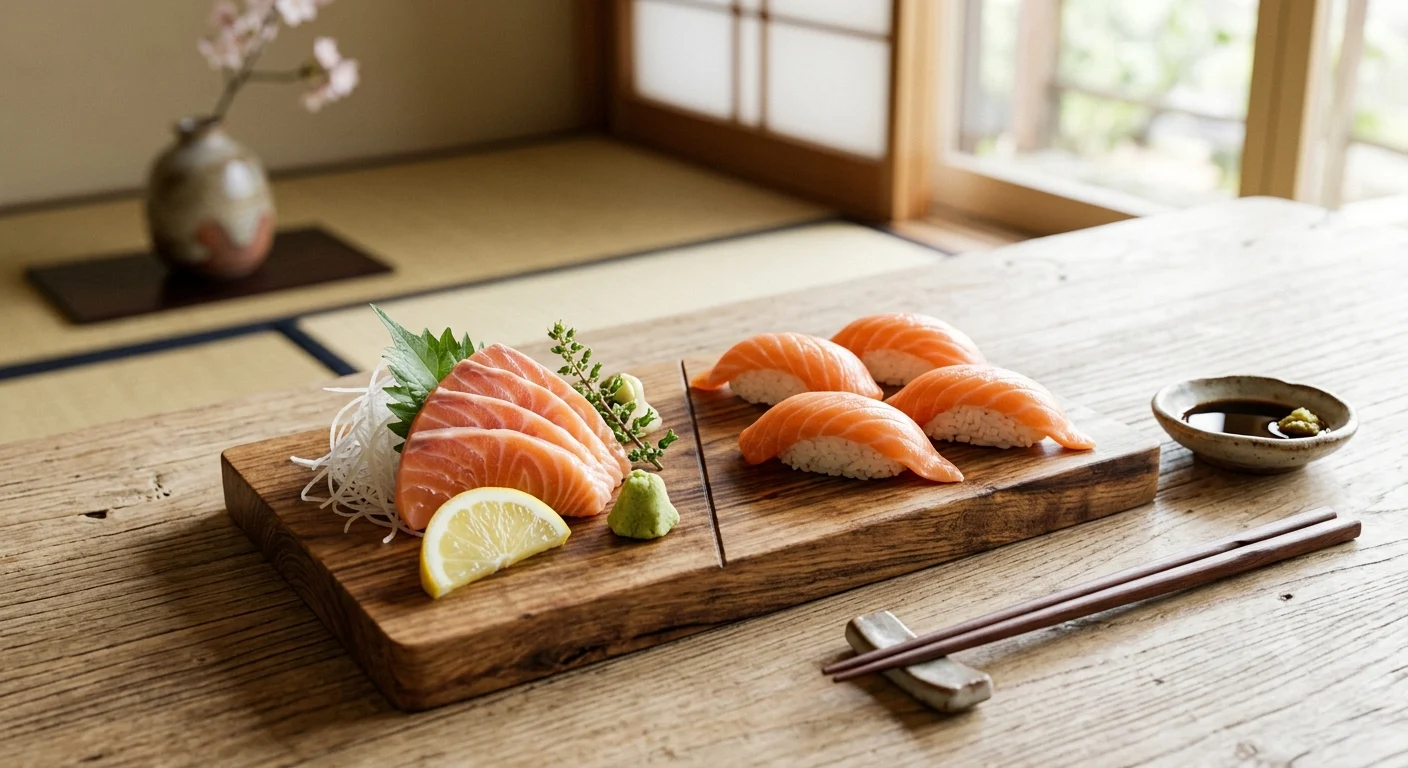
Sashimi is raw fish or seafood sliced into thin, bite-sized pieces. It comes with garnishes like daikon radish and shiso leaves. There is no rice, no seaweed, and no fillers. Just pure, fresh protein.
Nigiri (short for nigiri-zushi) is a small, hand-shaped oval of vinegared rice. A slice of fish—raw or cooked—is placed gently on top. The chef often adds a tiny dab of wasabi between the rice and fish.
Simple Examples:
- Sashimi: A plate of 5 salmon slices with just a lemon wedge.
- Nigiri: A single salmon slice resting on a tiny rice pillow.
The Origin of Sashimi and Nigiri
The word sashimi comes from the Japanese words sashi (pierced) and mi (body or flesh). It literally means “pierced flesh.” This name dates back to Japan’s Muromachi period (1336–1573). Back then, slicing fish was considered an art form, and chefs took pride in their knife skills.

Nigiri means “to grasp” or “hand-press” in Japanese. This style was invented in Tokyo (then called Edo) during the early 1800s by a man named Hanaya Yohei. He sold it as fast food from wooden carts on the streets. Unlike fermented fish of the past, he used fresh fish with vinegared rice, making it quick and delicious. Today, both dishes are global icons of Japanese cuisine. 🇯🇵
Pronunciation and Grammar Rules (UK vs US)
Unlike many English words, the spelling of sashimi and nigiri does not change between British and American English. However, the pronunciation is slightly different.
| Feature | American English | British English |
|---|---|---|
| Sashimi | /səˈʃiːmi/ (suh-SHEE-mee) | /sæʃˈiːmi/ (sash-EE-mee) |
| Nigiri | /nɪˈɡɪəri/ (nih-GEER-ee) | /niːˈɡiːri/ (nee-GEE-ree) |
| Plural Rule | Uncountable (some sashimi) | Uncountable (some sashimi) |
Important Grammar Tip: You never say “sashimis” or “nigiris.” These words are uncountable in English. Always say “pieces of sashimi” or “two pieces of nigiri.”
Sashimi vs Nigiri – Which is Better?
So, sashimi vs nigiri which is better? The honest answer is: it depends on your mood and diet.
Choose Sashimi if:
- You are on a low-carb or keto diet (zero rice!).
- You want the purest, cleanest taste of the fish.
- You enjoy a light, refreshing meal.
- You are at a high-end restaurant where the fish is exceptionally fresh.
Choose Nigiri if:
- You want a more filling meal (the rice makes it substantial).
- You are new to sushi and want a gentle introduction.
- You love the sweet-sour balance of vinegared rice with fish.
- You are on a budget (nigiri is cheaper because rice fills you up).
The Verdict: Neither is “better.” Sashimi is for purists. Nigiri is for comfort seekers. Try both and decide for yourself! 🤷♂️
Sashimi vs Nigiri Calories – Which is Lighter?
For health-conscious eaters, sashimi vs nigiri calories is a big question.
Sashimi has about 25 to 40 calories per ounce. Since it is pure protein with zero carbs, it fits perfectly into keto and low-carb diets.
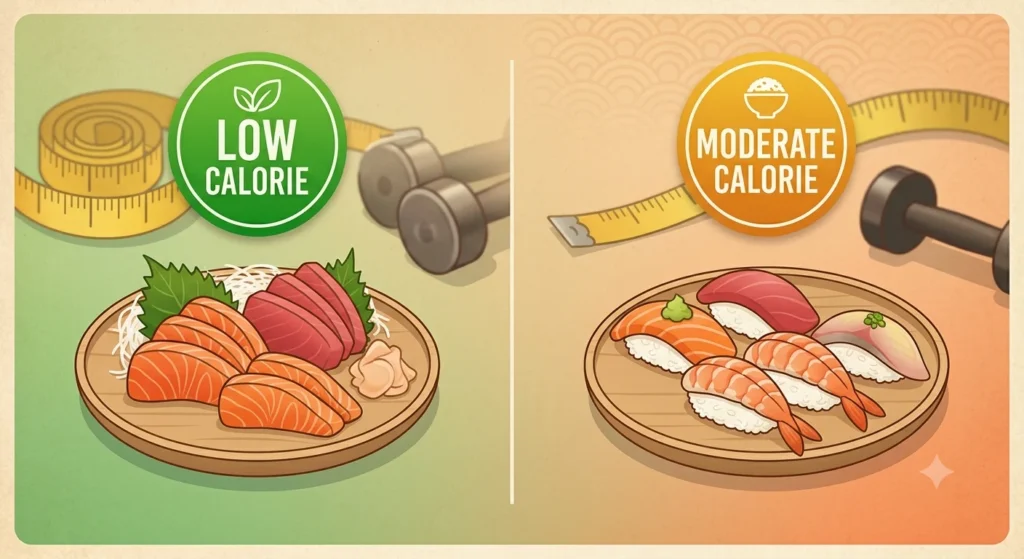
Nigiri has about 40 to 65 calories per piece (depending on the fish). The vinegared rice adds roughly 15-20 extra calories per piece, along with carbohydrates.
The Winner for Dieters: Sashimi is lighter and has fewer calories. But remember, nigiri gives you energy from the rice, making it a better meal for active days. Balance is key! ⚖️
Sashimi vs Nigiri vs Maki vs Temaki vs Hosomaki
There are so many sushi styles on a menu. Here is how sashimi vs nigiri vs maki vs temaki vs hosomaki compare:
- Maki is a sushi roll. Rice and fish are rolled inside a sheet of seaweed (nori) and cut into 6-8 bite-sized pieces.
- Temaki is a hand roll. It is a cone-shaped piece of nori filled with rice, fish, and vegetables. You eat it with your hands.
- Hosomaki is a thin roll. It has only one filling (like cucumber or tuna) and is smaller than regular maki.
The Key Difference: Sashimi has no rice. Nigiri has rice but no seaweed. Maki, Temaki, and Hosomaki have both rice and seaweed. So if you hate nori (seaweed), stick to sashimi or nigiri! 🧻
Sashimi vs Nigiri Taste – What to Expect
What about sashimi vs nigiri taste? They feel completely different in your mouth.
Sashimi tastes like pure, buttery ocean. Because there is no rice, the fish’s natural flavor and fat hit your tongue first. It is delicate, silky, and melts in your mouth. Salmon sashimi is rich and fatty, while tuna sashimi is clean and meaty.
Nigiri is a harmonious bite. You taste the slightly sweet, tangy rice mixed with the fish’s umami. The rice absorbs the fish’s juices, creating a balanced flavor. The texture is also softer because the rice gives it a pillowy feel.
Our Take: If you love bold, pure flavors, choose sashimi. If you prefer balanced, subtle flavors, choose nigiri. Both are delicious! 🤤
Common Mistakes with Sashimi and Nigiri
Avoid these embarrassing errors:
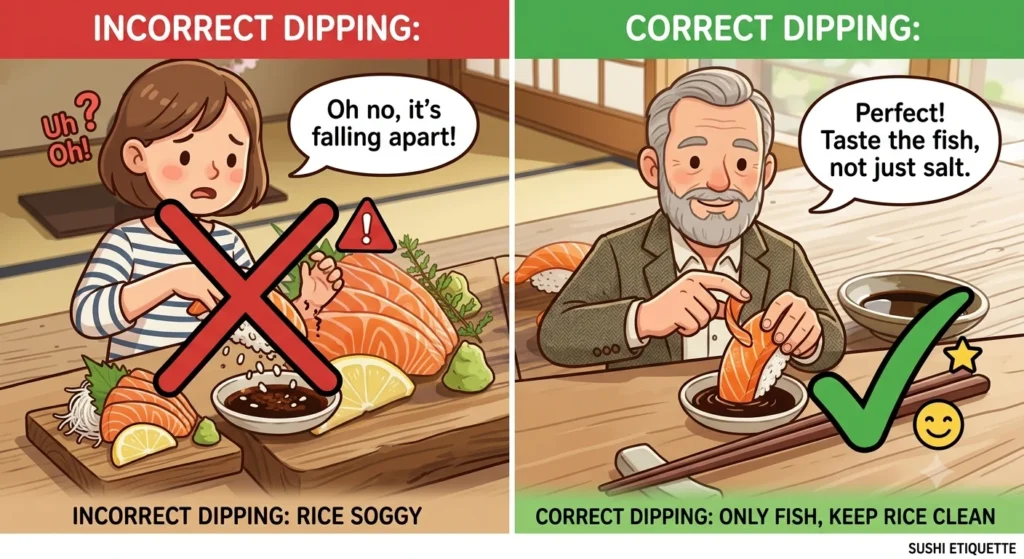
- Calling Sashimi “Sushi”: Sushi means “vinegared rice.” Sashimi has no rice, so it is NOT sushi.
- Drowning Nigiri in Soy Sauce: Dip the fish side lightly. Dipping the rice makes it too salty and breaks apart.
- Mixing Wasabi into Soy Sauce: In top restaurants, the chef already adds wasabi. Don’t ruin their work.
- Eating Sashimi with a Fork: Use chopsticks or your clean hands (it’s traditional!).
- Thinking Nigiri is Always Raw: Nigiri can have cooked eel (unagi) or shrimp (ebi). Always ask!
Sashimi vs Nigiri in Everyday Life
📧 Emails (Business):
“For the client dinner, let’s order a mix of sashimi and nigiri to accommodate both low-carb and traditional eaters.”
📰 News:
“The rise of sashimi consumption reflects a growing focus on protein-rich, low-carb diets worldwide.”
📱 Social Media:
“Tonight’s debate: sashimi vs nigiri – I couldn’t choose, so I got both! 🍣😍”
✍️ Formal Writing:
“Japanese cuisine offers various raw fish preparations, with sashimi emphasizing purity and nigiri showcasing the harmony of rice and seafood.”
Google Trends & Usage Data
Globally, nigiri is searched more often because it is strongly linked to “sushi,” which is globally famous.

- United States: Nigiri is more popular due to the massive sushi restaurant culture.
- United Kingdom & Australia: Sashimi searches are rising fast due to the keto and paleo diet trends.
- Japan: Both are equally traditional and loved.
Interestingly, searches for “sashimi vs nigiri calories” peak every January (New Year resolutions), and “sashimi vs nigiri which is better” spikes on weekends when people go out for dinner.
Complete Comparison Table
| Feature | Sashimi | Nigiri | Maki | Temaki |
|---|---|---|---|---|
| Has Rice? | ❌ No | ✅ Yes | ✅ Yes | ✅ Yes |
| Has Seaweed? | ❌ No | ❌ No | ✅ Yes | ✅ Yes |
| Shape | Thin slices | Oval rice ball | Cylindrical roll | Cone |
| Always Raw? | ✅ Yes | ❌ No | ❌ No | ❌ No |
| Calories (approx) | 25-40/oz | 40-65/piece | 30-50/piece | 50-70/piece |
| Best For | Low-carb diets | Beginners | Sharing | One-handed eating |
FAQs
1. Is sashimi healthier than nigiri?
Yes, sashimi has fewer calories and zero carbs, making it healthier for weight loss. Nigiri has rice, which adds carbs but also energy.
2. Can I eat nigiri with my hands?
Yes! In Japan, nigiri is traditionally eaten with fingers. Just dip the fish in soy sauce and pop it in your mouth.
3. Which costs more, sashimi or nigiri?
Sashimi is more expensive because you are paying for pure fish without any rice filler.
4. What is the best fish for beginners?
For both sashimi and nigiri, start with salmon or tuna. They are mild, buttery, and not too “fishy.”
5. Does nigiri always have raw fish?
No. Cooked options like grilled eel (unagi) and boiled shrimp (ebi) are very common.
6. What is the difference between sashimi and maki?
Sashimi has no rice; maki is a roll with rice and seaweed.
7. Bonus: Is it “waiving a fee” or “waving a fee”?
It is “waiving a fee.” “Waive” means to give up a right or cancel a rule. “Wave” means to move your hand back and forth. So a bank waives your late fee; they don’t wave it! 👋
Conclusion
The sashimi vs nigiri debate is easy to solve once you remember the rice rule. Sashimi is pure, sliced fish with nothing else—perfect for low-carb dieters and flavor purists. Nigiri is fish resting on a bed of vinegared rice—filling, balanced, and beginner-friendly.
Both dishes celebrate the freshness of seafood. Neither is superior to the other. Your choice depends on your hunger, your diet, and your taste buds. Next time you sit at a sushi bar, order both. Compare them side by side. That is the only way to know your true favorite.
Now go eat with confidence! 🍣🥢

E.M. Forster was an English novelist celebrated for his insightful stories about class, connection, and humanity, blending gentle humor with deep social themes.