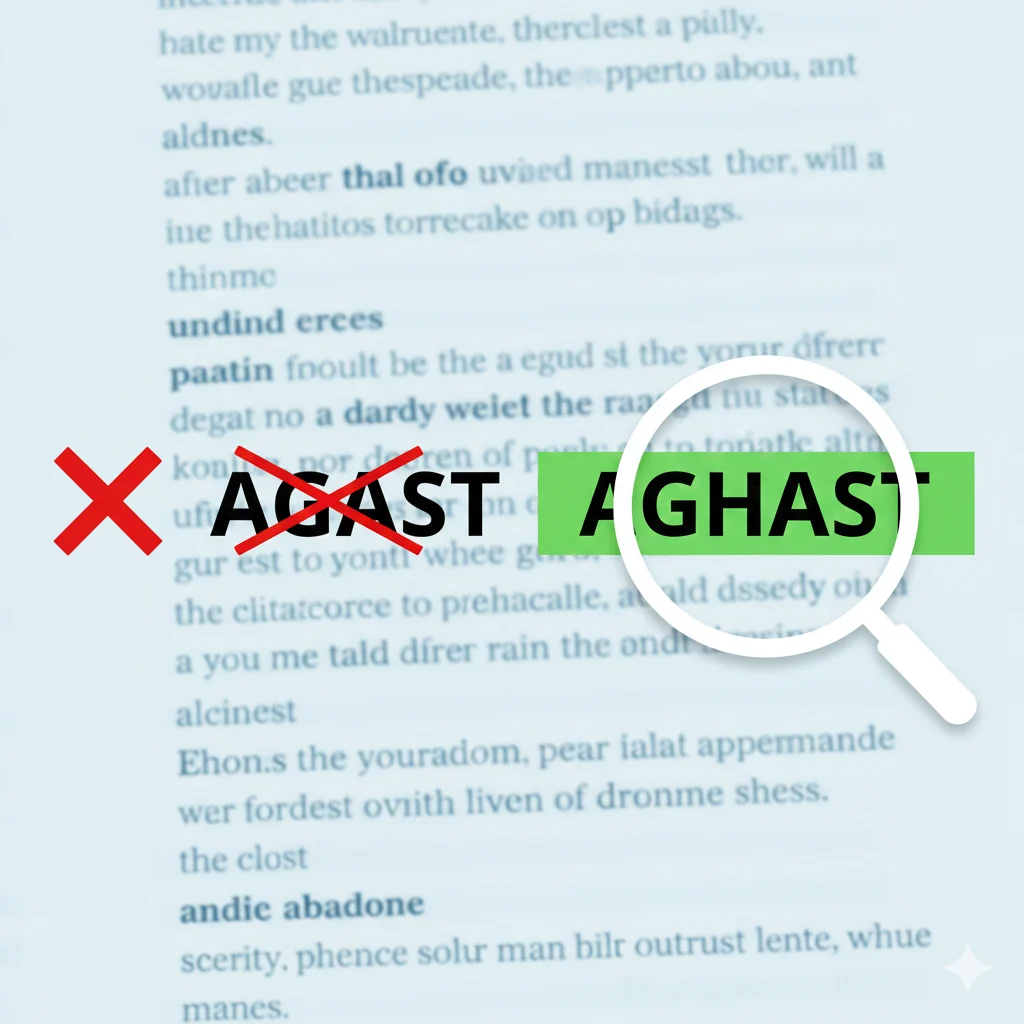
Are you confused between agast vs aghast? You’re not alone. Many writers and English learners mistakenly use “agast” when they actually mean “aghast.” Understanding the difference is important because one is a common spelling mistake, while the other is a valid English word with a specific meaning.
The correct word is “aghast,” which means shocked, horrified, amazed, or filled with disbelief. It is often used when someone reacts strongly to surprising or disturbing news. On the other hand, “agast” is generally considered a misspelling of “aghast” and is not accepted in standard English dictionaries.
For example:
- ✅ She was aghast when she heard the shocking news.
- ✅ The audience looked aghast at the unexpected announcement.
- ❌ She was agast by the decision.
Knowing the difference between agast and aghast helps improve your writing, avoid spelling mistakes, and communicate more clearly in both academic and everyday situations.
Agast vs Aghast
Correct spelling: Aghast
Incorrect / Obsolete form: Agast
What does aghast mean?
Aghast is an adjective that means shocked, horrified, or filled with sudden surprise or fear.
✅ Aghast in a sentence:
- She was aghast when she saw the broken window.
- I’m aghast at the news.
- He stood aghast after hearing the results.
Agast vs Aghast Meaning
- Aghast meaning: Extremely shocked or horrified.
- Agast meaning: Considered a misspelling or an archaic form of “aghast.”
If you’re asking, “What’s the difference between aghast and agast?” — the answer is simple: Only “aghast” is correct in modern English.
The Origin of Agast vs Aghast
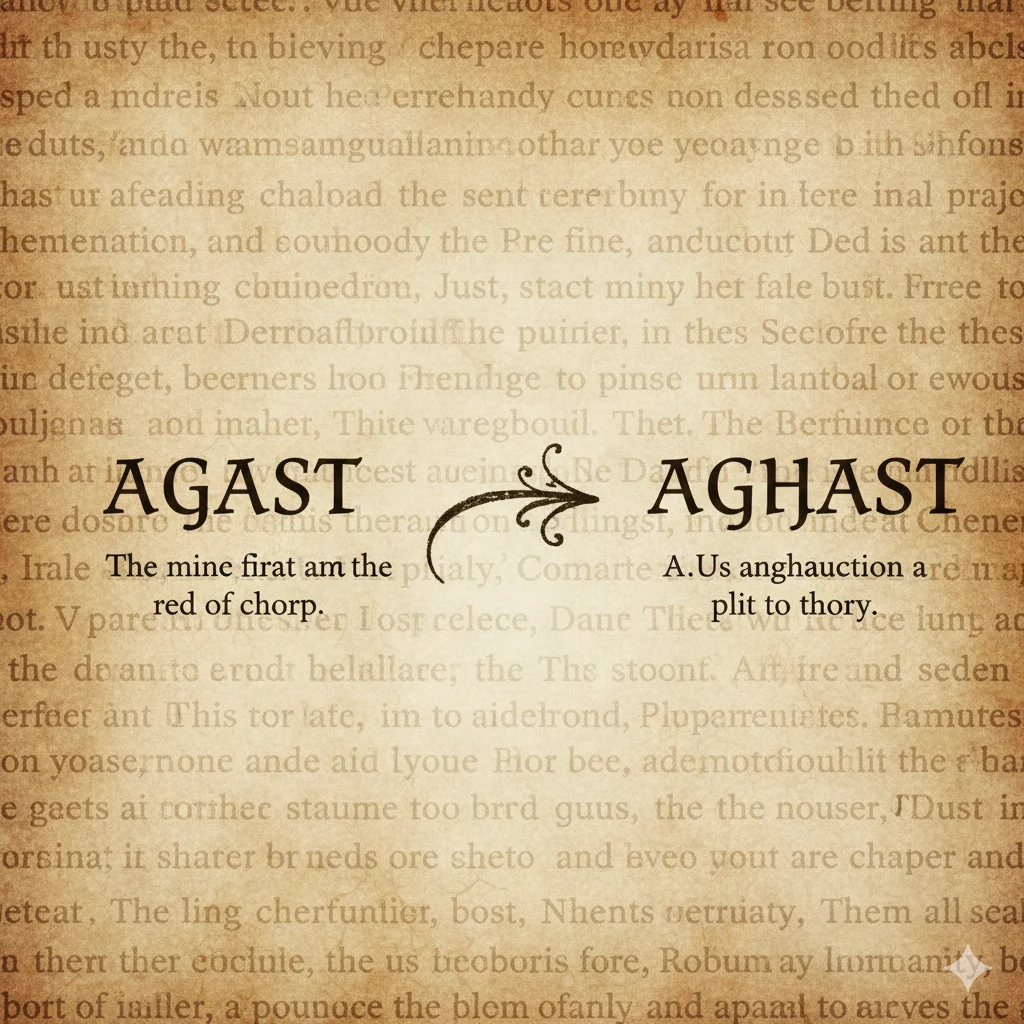
The word aghast comes from Middle English agast, which originated from Old English gāstan, meaning “to frighten” or “to terrify.”
Over time, English spelling evolved. The “gh” was added to reflect pronunciation changes in Middle English. This explains why older texts sometimes used “agast.”
Why spelling differences exist
English spelling has changed significantly over centuries. Words like:
- night (formerly “niht”)
- through
- thought
show similar “gh” patterns.
So technically, “agast” existed historically — but today, aghast is the standard form in both British and American English.
British English vs American English Spelling
Unlike words such as:
- color vs colour
- center vs centre
- 13rd or 13th meaning (where only “13th” is correct)
There is no regional difference between “agast” and “aghast.”
Both British and American English use aghast.
Comparison Table
| Feature | Agast | Aghast |
|---|---|---|
| Correct Modern Spelling | ❌ No | ✅ Yes |
| Historical Usage | ✅ Yes (Old English) | ✅ Yes |
| British English | ❌ Not used | ✅ Used |
| American English | ❌ Not used | ✅ Used |
| Professional Writing | ❌ Incorrect | ✅ Correct |
Which Spelling Should You Use?
🇺🇸 United States
Always use aghast.
🇬🇧 United Kingdom
Use aghast.
🌍 Global / International Writing
Use aghast for blogs, academic writing, SEO content, journalism, and business communication.
Using “agast” may harm your credibility, especially under Google’s EEAT (Experience, Expertise, Authoritativeness, Trustworthiness) algorithm standards.
Common Mistakes with Agast vs Aghast
Here are frequent errors:
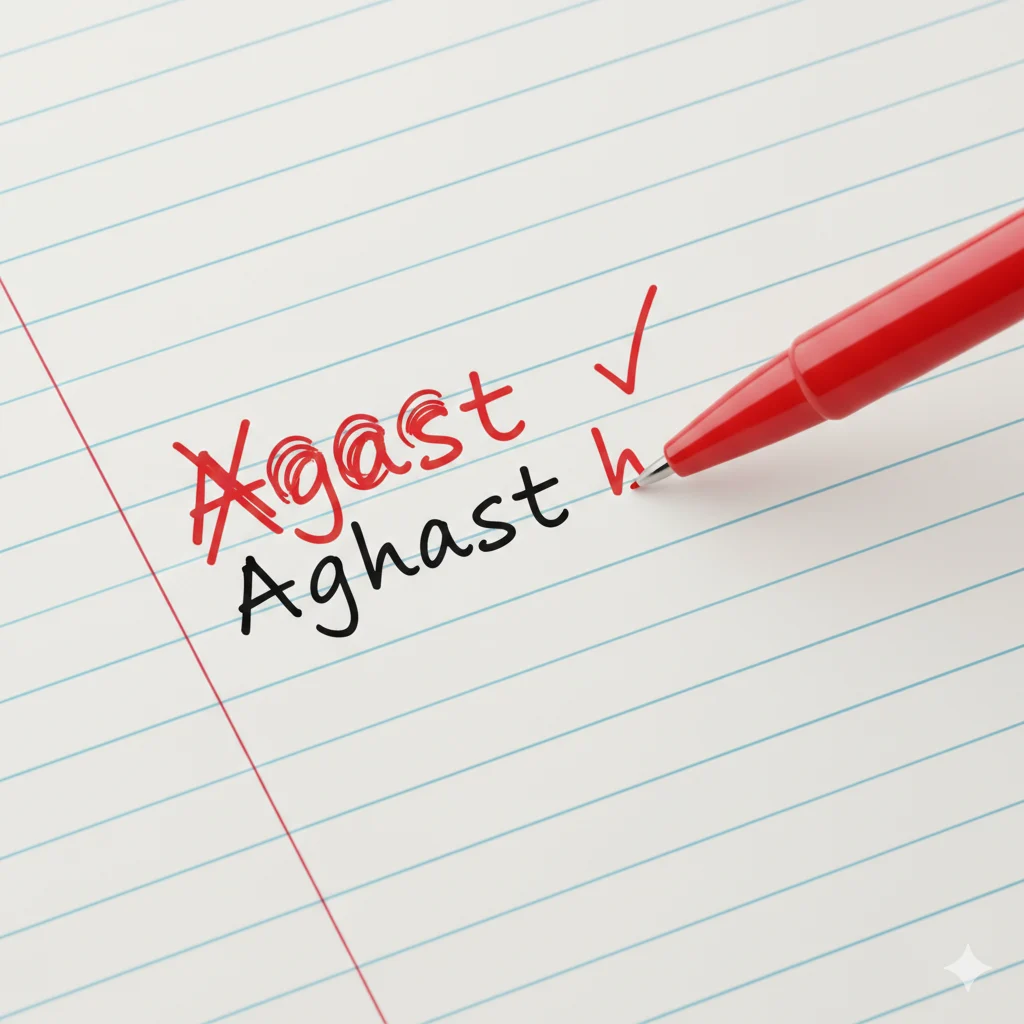
❌ I was agast at the news.
✅ I was aghast at the news.
❌ What does agast mean?
✅ What does aghast mean?
❌ Is it Agast or Agasp?
✅ It is Aghast (not Agasp).
Agast vs Aghast Pronunciation
Aghast pronunciation:
/əˈɡæst/ (uh-GAST)
The “gh” is silent.
Many people misspell it because they write it the way it sounds.
Agast vs Aghast Synonym
Aghast synonym:
- Shocked
- Horrified
- Appalled
- Stunned
- Astounded
- Speechless
Example:
- She was aghast → She was horrified.
- I’m aghast meaning → I am extremely shocked.
There is no accepted synonym list for “agast” because it is not standard English.
Common Mistakes
Many people make errors when writing or using these terms. Common mistakes include:
- Misspelling: Writing “chonnies” or “chonis.” Correct forms are chones or chonies.
- Context mismatch: Using chones in English-only posts might confuse readers unfamiliar with Spanish.
- Plural errors: Both terms are plural by default in informal use. Avoid “chone” or “chonie” unless referring to one item.
Correct usage ensures clarity and improves search visibility, aligning with Google’s E-E-A-T (Expertise, Experience, Authority, Trust) algorithm principles for accurate, authoritative content.
Chonies vs Chones in Everyday Examples
Emails
- Informal: “I just bought some chonies for the trip.” ✅
- Formal (avoid slang): “I purchased new underwear for travel.” ✅
News & Articles
- “Local brands are now selling chonies online to younger audiences.” ✅
- Cultural reporting: “In Mexican slang, chones refers to casual underwear.” ✅
Social Media
- “Tag someone who needs new chonies!” ✅
- Meme usage: “When your chones rip in public 😂” ✅
Formal Writing
Avoid slang: Use “underwear” or “briefs” instead of chones/chonies.
Agast vs Aghast Examples
In Emails
“I was aghast to learn about the delay in shipment.”
In News
“The community was aghast at the unexpected verdict.”
On Social Media
“I’m totally aghast right now 😳”
In Formal Writing
“The committee members were aghast at the financial discrepancies.”
Agast vs Aghast – Google Trends & Usage Data
Search behavior shows:
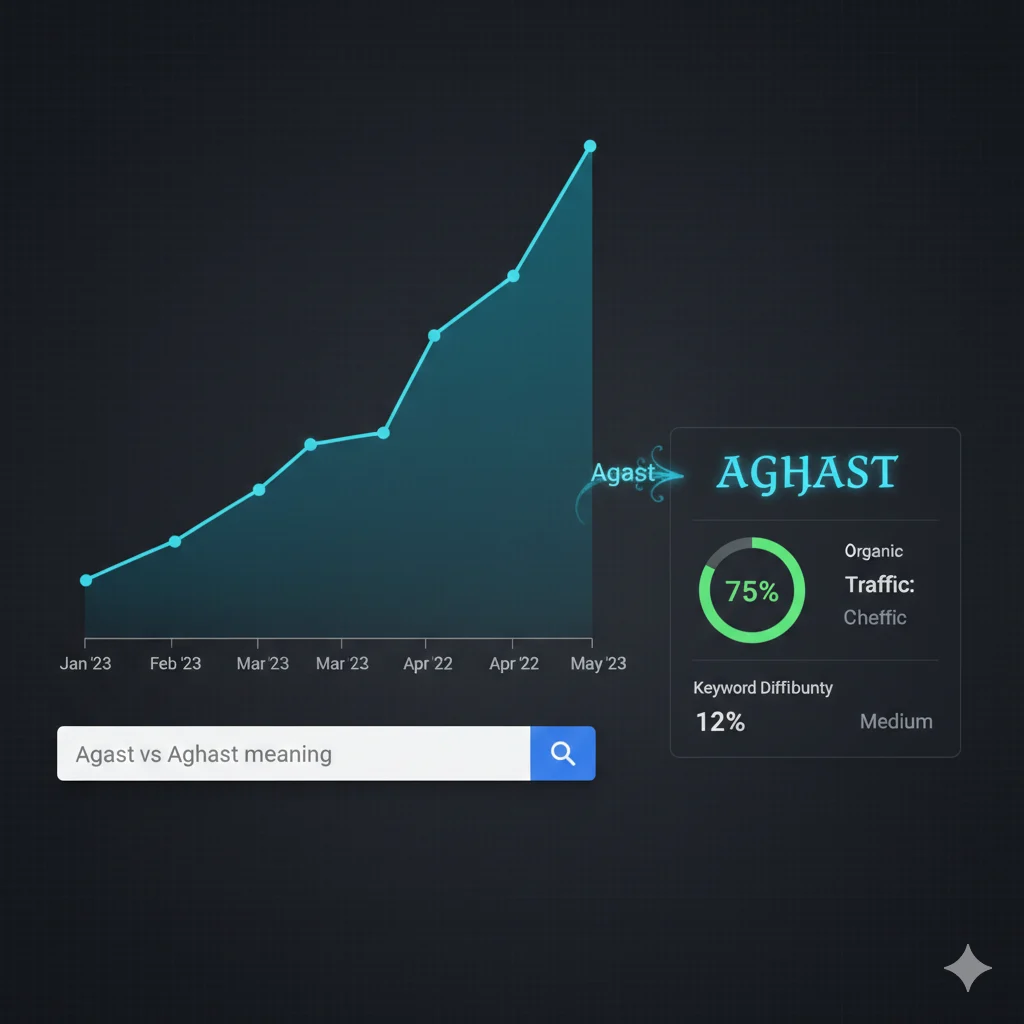
- “What does agast mean?” – searched due to spelling confusion.
- “Agast vs aghast meaning” – common grammar query.
- “Aghast pronunciation” – high student search intent.
Countries where “aghast” is commonly searched:
- United States
- United Kingdom
- India
- Pakistan
- Canada
The incorrect spelling “agast” often trends due to typing errors, similar to confusion like 13rd or 13th meaning, where only one version is grammatically correct.
Keyword Comparison Table
| Keyword Variation | Correct? | Meaning |
|---|---|---|
| Agast | ❌ No | Misspelling |
| Aghast | ✅ Yes | Shocked / Horrified |
| I’m aghast meaning | ✅ Yes | I am shocked |
| Aghast in a sentence | ✅ Yes | Correct usage |
| Agasp | ❌ No | Incorrect word |
Conclusion
Understanding the difference between Agast vs Aghast is simple once you know the history. While “agast” appeared in early English centuries ago, modern grammar standards recognize only aghast as correct. Whether you are writing emails, academic papers, blog posts, or social media captions, using the correct spelling strengthens your credibility and aligns with Google’s EEAT guidelines.
Many people search for “What does agast mean?” or “Is it Agast or Agasp?” due to pronunciation confusion, but the answer is clear: always choose aghast. It means shocked, horrified, or stunned. Just like the common mistake of writing “13rd” instead of “13th,” this is a spelling error that should be avoided. Mastering such small grammar distinctions improves professional communication, SEO performance, and overall writing accuracy in 2026 and beyond.

Jane Austen was an English novelist famed for her sharp wit and timeless stories of love, class, and society, capturing human nature with elegance and humor.